Where LED video walls work
Indoor LED video walls suit very different spaces, from executive meeting rooms to high traffic retail entrances and stage backdrops. This page helps you compare the main application types so you can match pixel pitch, brightness, control and mounting to the room you actually have.
Not every room asks the same thing from an LED wall
An indoor LED wall in a Randburg boardroom is doing a different job from one in a mall, church or club. Viewing distance, ambient light, camera use, ceiling height and daily operating hours all shape the panel choice. That is why this section groups applications by the way the screen is used, not only by screen size.
Some sites need fine detail for spreadsheets, brand films and video calls. Others need scale and impact from further back, with content that can stay visible under bright internal lighting. In a studio or worship space the wall may also sit on camera, which makes panel uniformity and refresh behaviour more important than people expect.
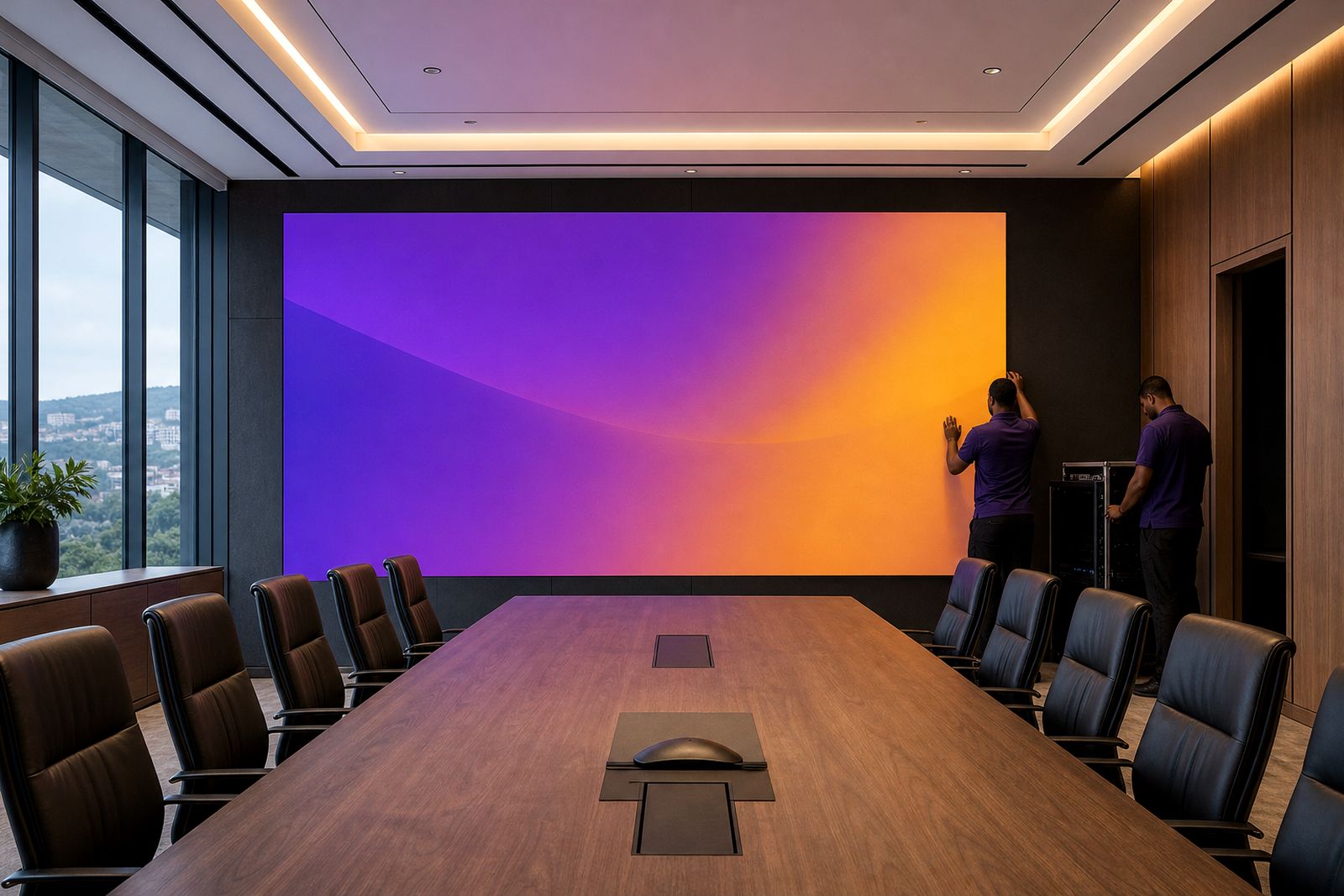
Boardrooms and conference rooms need clarity at close range
Meeting spaces usually place viewers near the wall, often between 2 and 6 metres away. In those rooms, a finer pixel pitch matters because text edges, graphs and faces must read cleanly from the first row. Mounting depth also counts, especially where the wall sits flush into joinery or a recessed bulkhead.
- Best where presentation detail matters more than sheer size.
- Often paired with processors that handle laptops, conferencing systems and scheduled playback.
- Usually built as permanent installations with neat cable routing and service access.
- Good fit for executive boardrooms, training rooms and divisible conference spaces.
If the room is narrow, a slightly smaller wall with a finer pitch often works better than a bigger wall with coarse spacing. It sounds backwards, but close seating changes everything.
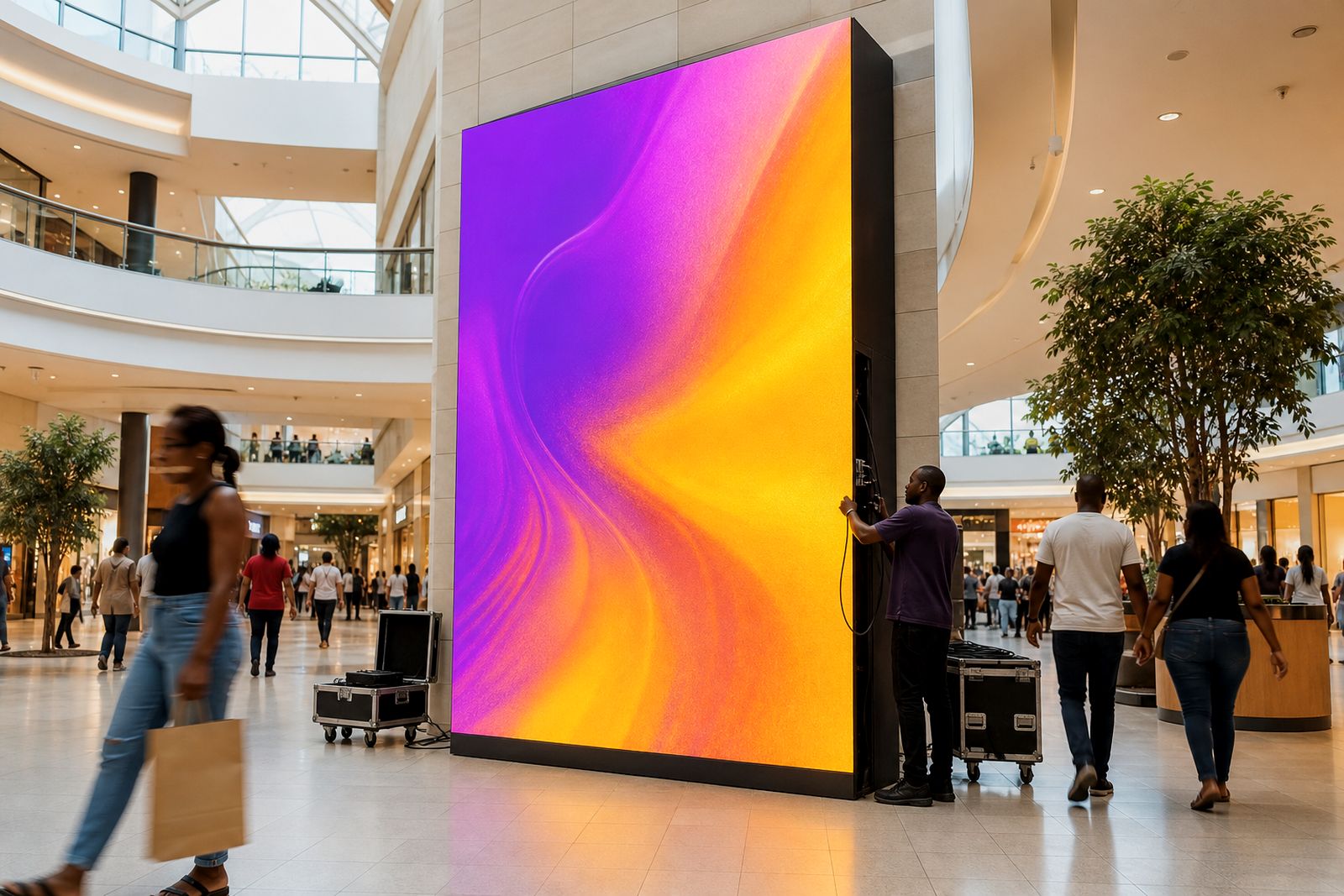
Retail and mall screens work harder under bright lights
Retail LED walls need to catch attention quickly while staying readable in busy interiors. Storefront glazing, polished floors and overhead lighting all affect perceived contrast, so brightness and content layout need proper planning. A wall aimed at passing foot traffic is not briefed the same way as one inside a fitting area or cashier zone.
- Entrance displays benefit from strong colour, motion and wide viewing angles.
- In-store feature walls usually need better image detail for product shots and offers.
- Mall activations often need modular frames that can be removed or reconfigured.
- Long daily run times make ventilation and service access worth planning early.
For national roll-outs, consistency matters across branches in Gauteng, the Western Cape, KwaZulu-Natal and the rest of the country. A wall that looks good in one centre can wash out in another if the lighting is harsher, so a site survey really helps here.
Venues, churches and clubs place more weight on scale and control
In entertainment and worship spaces, the audience is usually further back and the content changes often. Sermon lyrics, IMAG feeds, DJ visuals, sponsor loops and event branding each place different demands on the processor and playback chain. These jobs also involve rigging points, stage framing, operator position and line of sight to side seating.
Rental-ready panels can make sense where layouts change between weekends or conference sessions. Permanent walls suit auditoriums and fixed stages where the structure and content flow stay mostly stable, though there is always some room for future inputs and scene presets.
- Choose finer pitch when cameras are close or the front rows sit near the wall.
- Choose more modular framing when the stage layout changes often.
- Allow for operator control, confidence monitors and playback devices in the signal plan.
- Plan around room acoustics so the wall position does not fight with loudspeaker coverage.
Studios and control rooms need different panel behaviour
A display wall used on camera needs more than a nice showroom image. Broadcast style environments look closely at colour consistency, scan behaviour, moire risk and how the wall behaves through different camera settings. Even a content room used for product launches or internal streaming can expose issues that would pass unnoticed in a foyer.
Where the wall forms part of a filmed set, finer pitch and careful processor setup are usually the safer route. Cable access, quiet cooling and exact alignment become more important too, because small installation errors show up fast under studio lighting. These spaces are less forgiving, and that is true even on modest builds.
A practical way to narrow the right application path
If you are comparing options, start with the room before the panel. Most wrong selections happen when people choose by screen size alone.
- Close viewing with text and detailed visuals: boardrooms, training rooms and compact conference rooms.
- Bright public environment with promotional content: retail stores, malls and reception areas.
- Large audience and changing live content: churches, clubs, stages and event venues.
- Camera-facing use with controlled lighting: studios, streaming rooms and presentation sets.
- Fixed wall every day: permanent panel system with integrated mounting.
- Frequent pack-down or layout changes: rental-ready panel system and transport planning.
Once that is clear, we can map the wall size, aspect ratio, processor inputs and mounting method to the actual site. For application guidance across South Africa, send the room details through our contact form.
Explore the range
LED walls for boardrooms and conference rooms
Practical guidance on using one smooth LED wall in place of projectors or multi-screen TV layouts.
Read more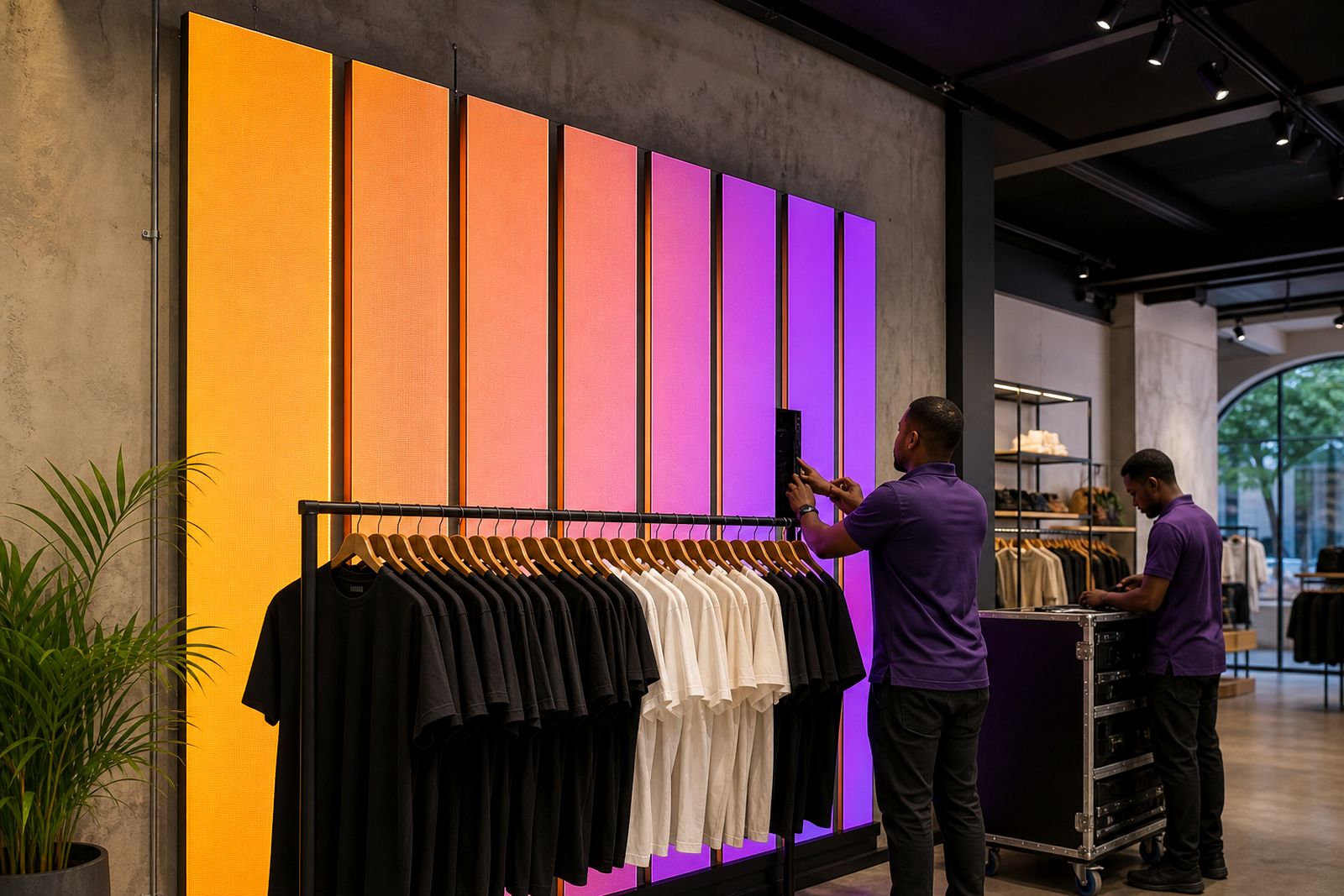
LED walls for retail stores and malls
Indoor LED walls for shopfronts, feature zones and atriums need the right pitch, brightness and mounting plan.
Read more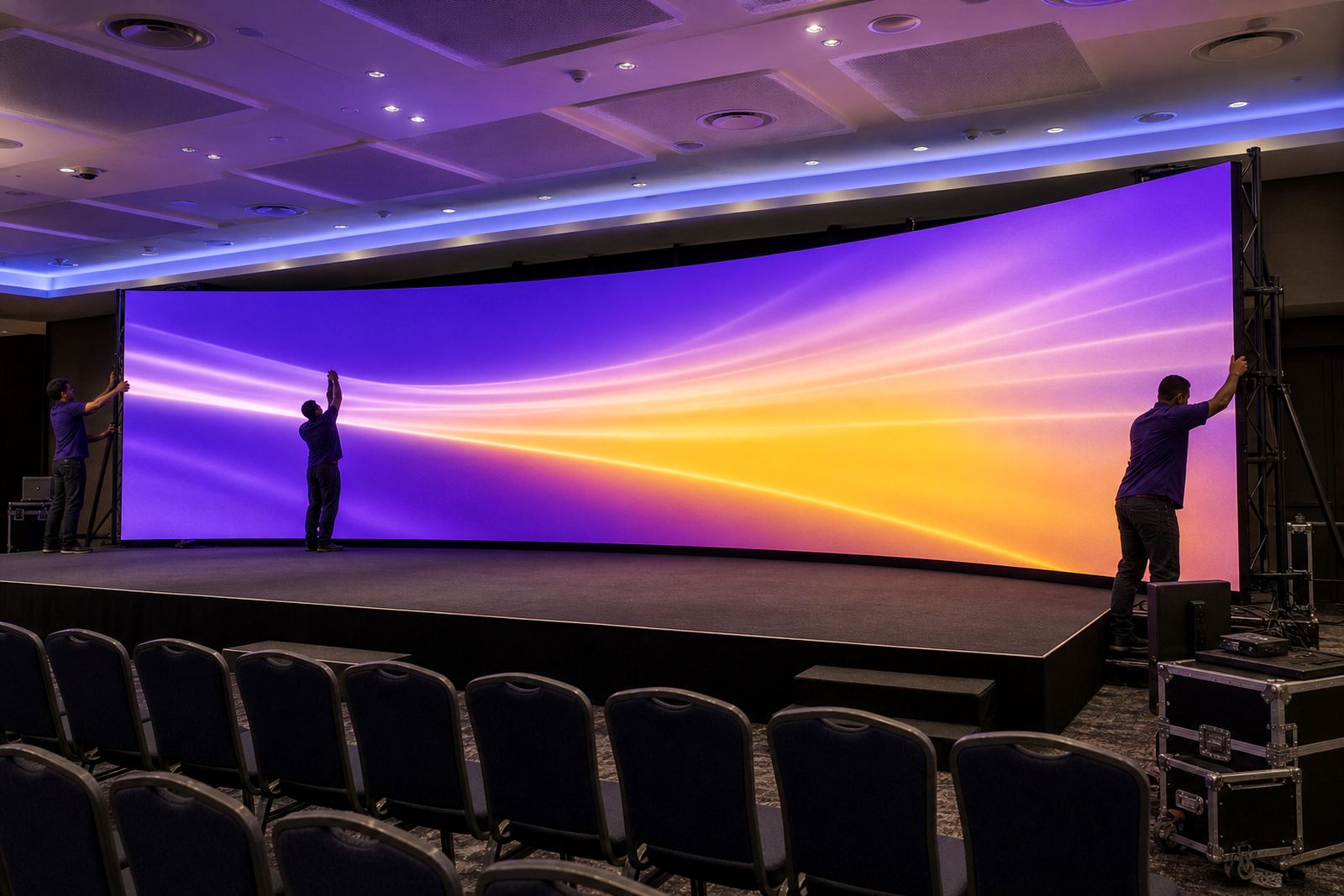
LED walls for events, clubs and venues
Practical guidance for stage backdrops, club walls and indoor event screens that need to perform under real venue conditions.
Read more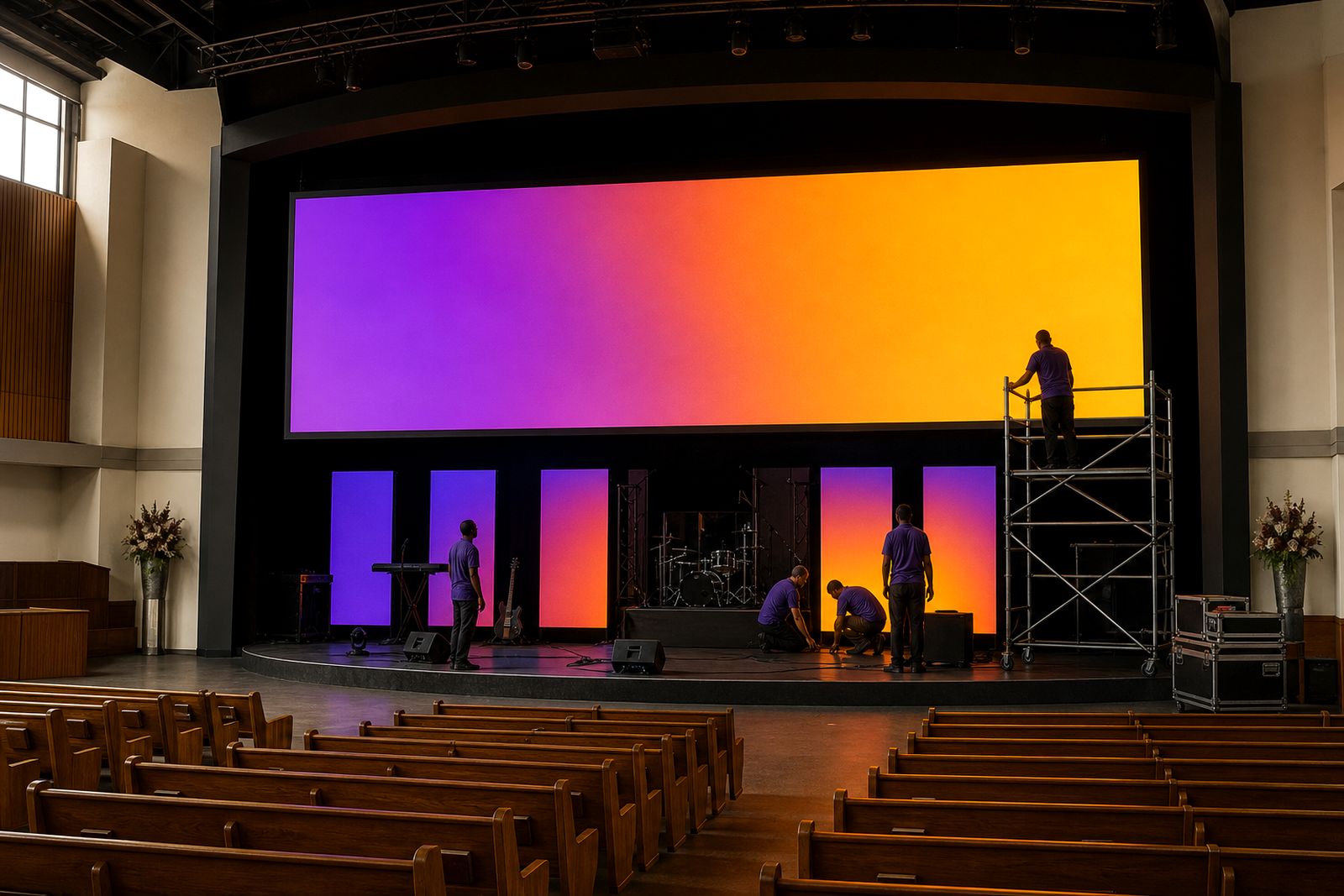
LED walls for churches and auditoriums
Indoor LED walls bring sharper lyrics, sermon notes and live camera feeds to large rooms with difficult viewing distances.
Read moreWhat our LED Video Walls customers say
Verified Google reviews
Questions we get asked
Can one type of indoor LED panel suit every application?
Usually not. A panel that works well in a church stage or mall activation may be too coarse for a boardroom where people sit close and read detailed content.
Do you handle both permanent and rental-ready indoor LED walls?
Yes. We supply and install fixed indoor walls for daily use, and we also work with rental-ready panel systems for event and venue setups.
Do you supply outdoor billboards, TVs or projectors?
No. This section is focused on indoor LED video walls and the processors, mounting and playback hardware that support them.
Tell us about the job
Send sizes, materials and where you are through our contact form, and we will come back with the practical options.
Open the contact form