Design and installation
A good indoor LED wall starts long before the first panel is lifted into place. We plan the wall, structure, power, data routes and commissioning so the finished screen suits the room and runs properly day to day.
What is included in the installation scope
Our installation work covers the practical parts that determine whether an LED wall looks right and remains stable in daily use. The scope begins with a room check and layout review, then moves through mounting design, cable planning, processor setup and final picture calibration. For boardrooms in Randburg, retail floors in Gauteng and larger roll-outs in other provinces, the aim is the same: a wall that fits the space neatly and performs as intended.
We handle permanent indoor walls and rental-ready indoor systems for venues that need repeat assembly. Where the project calls for content playback, we include the playback hardware and set the signal path correctly, but we do not create video content.
- On-site survey or remote pre-assessment where suitable
- Screen size and aspect planning to match the room and viewing distance
- Mounting frame layout and fixing method selection
- Power and data routing for clean service access
- Processor, controller and playback setup
- Panel alignment, brightness balancing and commissioning checks
Survey, measurements and wall planning
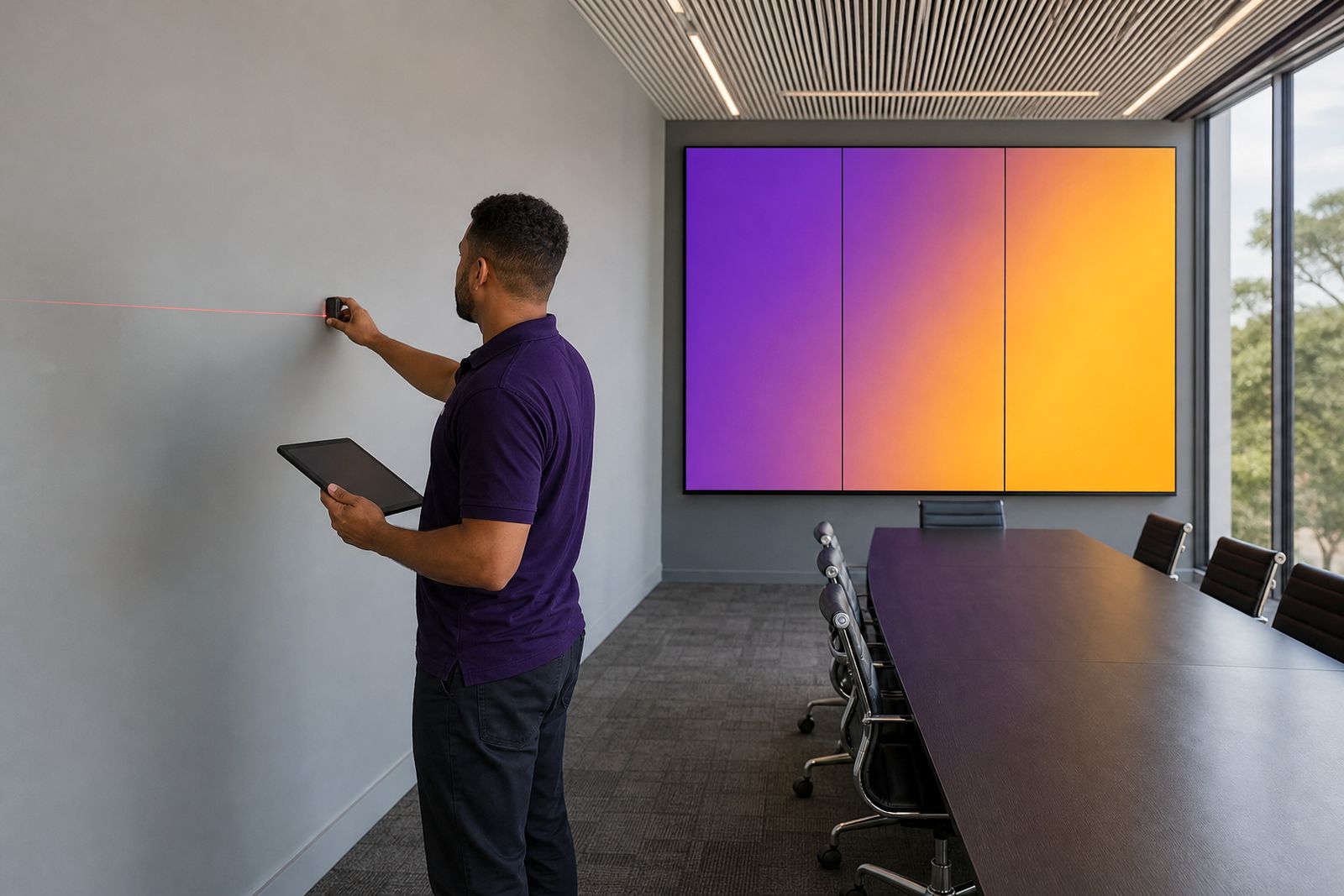
Every room has limits that matter. Ceiling bulkheads, glazing, air-conditioning grilles, fire equipment, existing joinery and public traffic routes can all affect panel size and mounting depth. During the survey we measure the display area, record clearances and note where power and data can enter without leaving exposed runs across the room.
We also look at how the wall will actually be used. A conference room usually needs readable text and video-call layouts at closer seating distances, while a mall installation may need higher brightness and a format that works for promotional loops viewed on the move. Churches and auditoriums often need clean camera-friendly output and good visibility from wider seating blocks.
- Available wall width, height and finished depth
- Viewing distance and the likely pixel pitch range
- Access for delivery, lifting and panel service
- Ambient light from windows, shopfronts or house lighting
- Existing mains supply position and distribution capacity
- Source devices, switching needs and audio-visual integration points
Where municipal or centre rules apply, especially in malls and multi-tenant buildings, we work to the access windows and installation conditions set for the premises.
Structure, power and data requirements
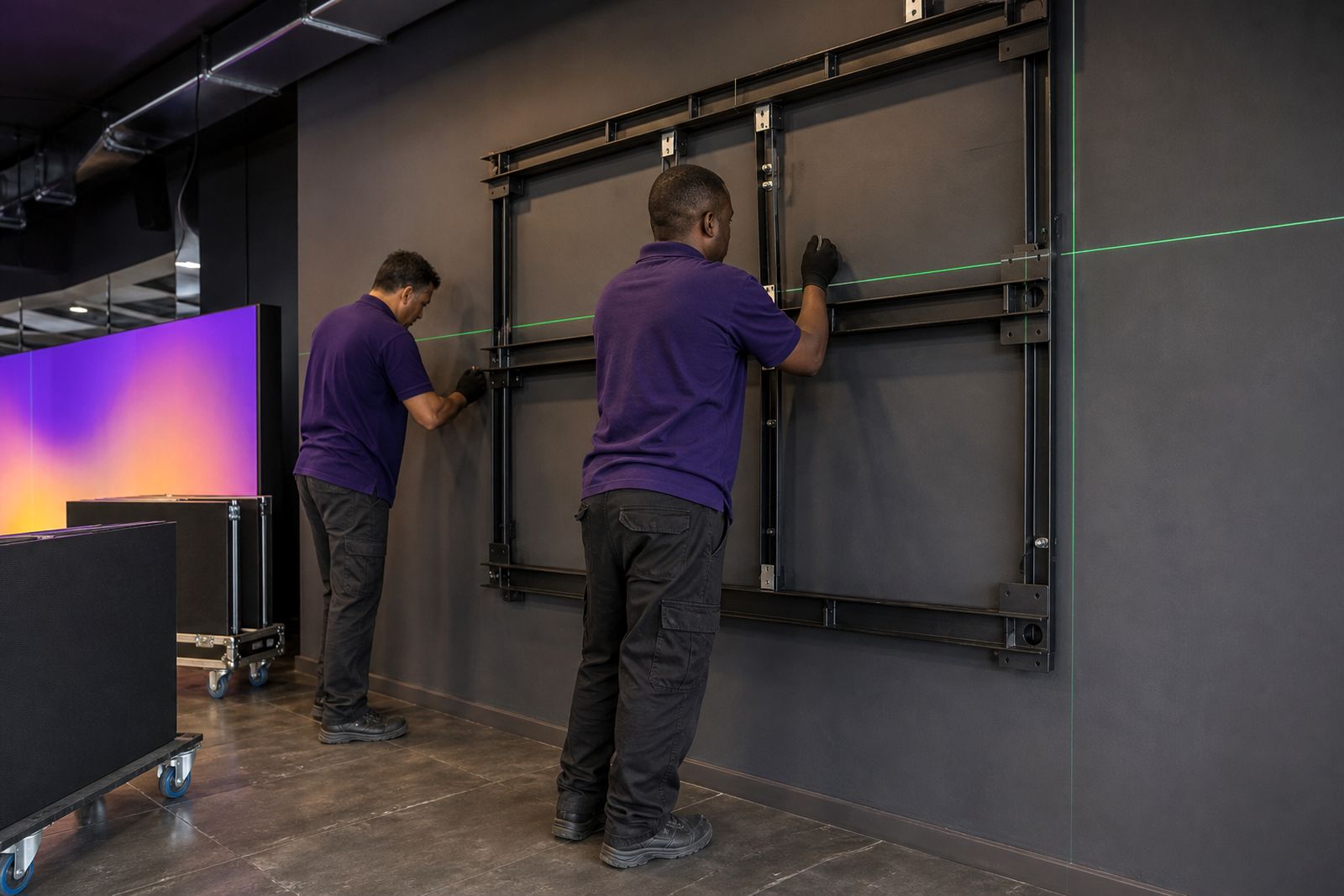
An indoor LED wall is more than a set of panels clipped together. The supporting structure has to suit the wall size, the mounting surface and the service method. Some rooms allow direct fixing to a prepared wall, while others need a steel support frame or a stand-off system to clear skirtings, cladding or shallow recesses. Service access is planned early so a failed receiving card or power module can be reached without pulling half the wall apart.
Power and data are laid out to keep loading balanced and cable runs tidy. In offices and conference spaces we normally separate mains feeds from signal routes where practical, which helps with fault-finding later. If the building has backup power or generator changeover, we check how the display equipment will behave during transfer. That matters in venues where the wall forms part of live presentations.
Typical installation parameters include screen depths from about 60 mm to 150 mm before the finished trim detail, depending on panel type and frame method. Signal distribution is usually over dedicated data runs between processor and panels, with source inputs selected around the room workflow. Ventilation around the rear of the wall must be kept within the equipment requirement, even on smaller jobs where the cavity looks generous at first glance.
Installation sequence and commissioning
Once the design is signed off, we schedule the installation around access restrictions and room readiness. The frame or fixing points are set out first, then the power and data routes are prepared. Panels are fitted in sequence, cabled, addressed and checked before image alignment begins. This order keeps faults easier to isolate and avoids chasing finishing issues at the end.
- Set-out and confirmation of final screen position
- Frame installation or direct wall fixing preparation
- Power distribution and data cabling
- Panel mounting, addressing and module checks
- Processor and source configuration
- Colour, brightness and uniformity adjustment
- Operational handover with basic user guidance
Commissioning includes testing for correct input switching, stable image output, panel mapping and visible seam alignment. On fine pitch walls, alignment tolerances are tighter and the room usually needs a more careful check for reflections and close-range sightlines. Before handover, we run through shutdown and startup procedure with the client team so the daily routine is clear.
What the client should prepare before the team arrives
The smoothest installations happen when the room is ready for the physical work. Clear access to the wall area, agreed working hours and confirmation of the final source devices help avoid delays on the day. If other trades are involved, especially builders, electricians, shopfitters or ceiling crews, their work should be coordinated so the wall position and cable entries are not changed midway through.
- Approved wall position and screen size
- Safe access route from offloading point to room
- Mains supply brought to the agreed point by a qualified electrician where required
- Network or control connections available if these form part of the brief
- Finished wall surface or supporting steel ready before panel fitting
- Any landlord, mall or venue access permits in place
For occupied offices and trading stores, it helps to identify quiet hours for drilling and lifting work. In coastal locations, indoor humidity control also matters more than many teams expect, and equipment should not be stored for long periods in damp back rooms before installation.
How costing is built up and what happens after handover
Installation pricing is worked out from the wall size, pixel pitch, panel type, structural method and the complexity of the room. A small boardroom wall on a prepared surface is priced differently from a recessed retail feature wall with custom steelwork, long cable routes and access limits. Travel, accommodation for out-of-town work, after-hours access windows and any special lifting requirements also affect the total.
After handover, support covers the practical needs that keep the wall usable: image checks, fault tracing, module replacement where needed, controller settings and advice when the source setup changes. If the room use changes later from presentations to digital signage or from static inputs to mixed live feeds, we can adjust the signal chain and operating layout to suit. For more detail on ongoing care, clients can use our contact form or read the support section of this site.
What our LED Video Walls customers say
Verified Google reviews
Questions we get asked
Do you handle the structural frame for the LED wall?
Yes. We assess the wall or support point, then specify the suitable frame or fixing method for the panel type and the room conditions.
Can you install in malls, churches and venues outside Gauteng?
Yes. We are based in Randburg and handle shipping, installation and support work across every province, subject to site access and project scope.
Do you supply TVs, projectors or outdoor billboards?
No. This service is for indoor LED video wall systems, including panels, processors, mounting and commissioning.
Tell us about the job
Send sizes, materials and where you are through our contact form, and we will come back with the practical options.
Open the contact form