
LED walls for retail stores and malls
Retail LED walls have to sell clearly from the first glance, not just look bright. In shops and malls, the right panel, pitch and mounting plan decide whether content reads cleanly at two metres or turns into glare and visual noise.
Shop windows need a different brief from the sales floor
A window-facing LED wall works against daylight, reflections on glass and fast-moving foot traffic. The job is not only to make the picture bright. It must stay readable when shoppers pass at an angle, when the winter sun hits the frontage, and when the store changes promotional artwork every few days. In Sandton, Rosebank and the wider Gauteng retail strip, glazed shopfronts can be unforgiving if the panel choice is wrong.
For window installs, pixel pitch matters because the viewing distance is usually short. A fine pitch panel keeps text edges cleaner and skin tones more natural when someone stops close to the glass. Mounting depth also matters. In a narrow window reveal, a bulky support frame can steal display area and make servicing awkward later.
- Measure the true viewing distance from the glass line, not only from inside the shop.
- Check reflections at different times of day before fixing brightness targets.
- Plan content for large type, strong contrast and short loops.
- Leave service access where the landlord and shopfitter will actually allow it.
Feature walls inside the store must support the product, not fight it
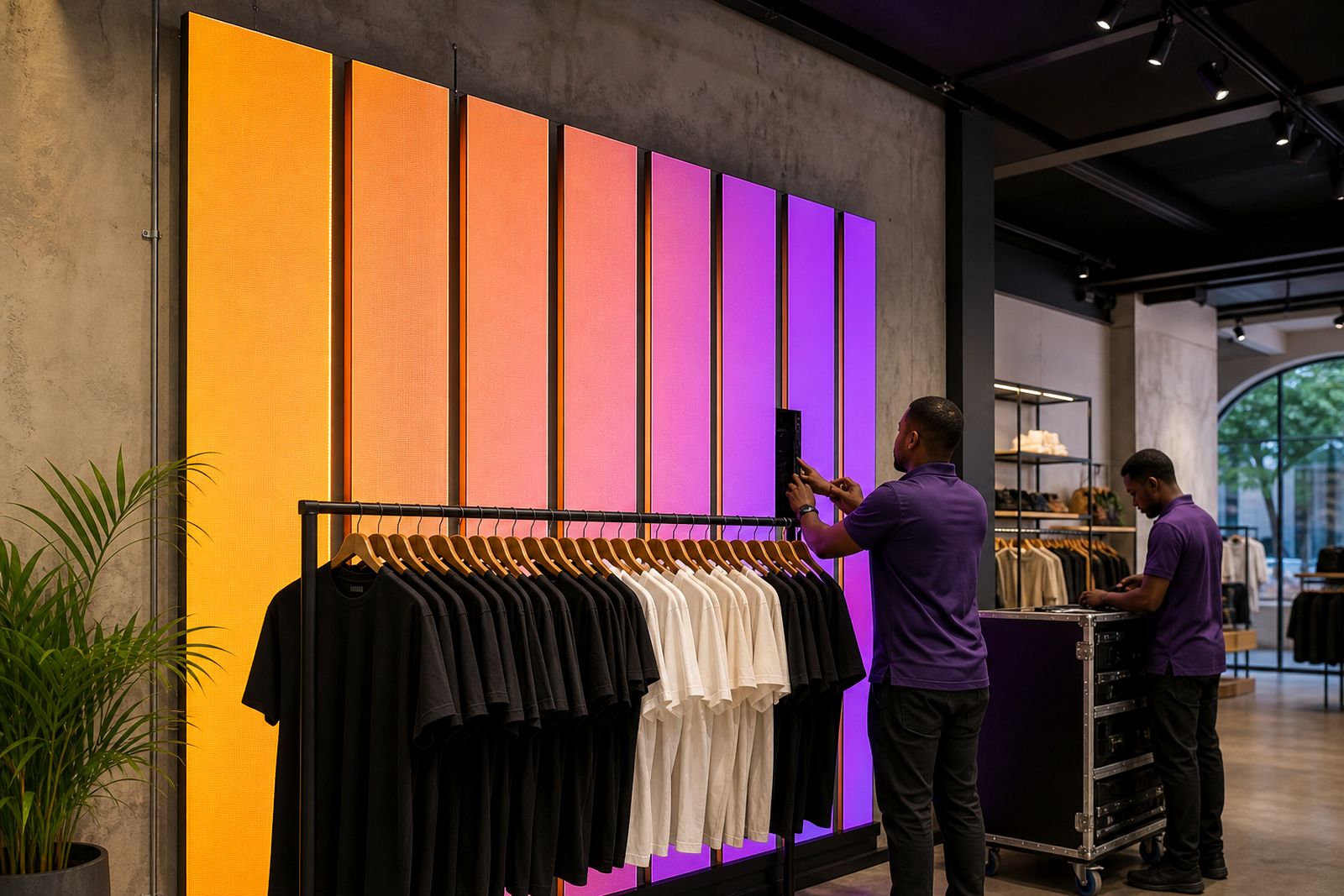
Inside the store, the LED wall often sits behind a launch table, footwear wall, cosmetics bay or cashier queue line. Here the screen becomes part of the merchandising plan, so the picture must feel stable and refined at close range. Harsh colour, obvious panel joins or poor scaling can cheapen an expensive interior very quickly.
We usually look at the store path first. A wall opposite the entrance takes one type of content, while a wall beside a browsing aisle takes another. Fast edits and tiny text may suit a club venue, but in retail they can tire shoppers and distract staff. A good in-store wall supports offers, seasonal launches and brand film without drowning out the actual stock on the shelf.
- Use panel sizes and aspect ratios that suit the architecture, not just the media file.
- Keep content zones clear if prices, product shots and directional messages share one canvas.
- Allow for ambient music, lighting changes and mirrored finishes nearby.
- Specify a controller that can handle scheduled playlists and simple source switching.
Atrium screens live under mall rules as much as display rules
A mall atrium wall is seen from escalators, upper levels and long concourses, so the design brief stretches beyond one tenant. Centres often have strict conditions around fixing points, access windows, electrical sign-off and after-hours work. The bigger the wall, the more coordination matters with centre management, rigging teams and the store's own fit-out crew.
Height and distance can tempt people into using a coarse pitch simply to cover more area. That can work for broad promotional visuals, but atrium audiences often stop on the level directly opposite the wall. If campaign text needs to be read from there, the pitch and content plan have to be checked together. We also look at spill light onto neighbouring shopfronts, especially in enclosed malls where polished floors bounce light all over the place.
For large indoor walls, processor choice becomes part of the picture quality story. A clean signal path, proper scaling and sensible content formatting prevent soft images on a very visible screen. It sounds obvious, but this is where a lot of atrium jobs go wrong.
A Randburg workshop example: front access solved the maintenance problem
One recent retail brief from our Randburg side involved an indoor feature wall for a fashion store, paired with a smaller window display panel. The store design left almost no rear service space because the wall backed onto shelving and a stock passage. Pulling the shelving out for maintenance would have meant lost trading time and a lot of fuss with the fit-out team.
We built the plan around front service access, a tighter mounting frame and careful panel alignment so the finished wall sat neatly within the wall recess. On the window side, brightness had to be balanced against heavy afternoon glare through laminated glass. A test section made the issue clear: the original artwork looked fine indoors but washed out from the mall passage. After adjusting the content layout and screen settings, the offers became readable from several metres back. Small changes did most of the work there, not brute brightness.
The useful lesson was simple. Retail walls should be drawn with maintenance and day-to-day trading in mind from the start, otherwise the smartest display can become a headache six months later.
What to settle before panels are ordered
Retail projects move alongside shopfitting, signage, ceilings, sprinkler lines and tenancy deadlines, so the LED wall brief needs proper detail early on. Even a modest in-store screen can run into preventable site issues if wall structure, power position or access routes are guessed. We prefer to pin down the physical conditions before anyone assumes a panel size.
- Final wall width, height and any bulkheads or columns that limit the format.
- Viewing distances for passing traffic, queueing customers and close product interaction.
- Power location, circuit capacity and where equipment can be housed neatly.
- Mounting surface details including blockwork, drywall, steel or a shopfitted frame.
- Trading-hour restrictions for noisy work in malls and enclosed centres.
- Content sources such as media player, laptop input or central campaign scheduling.
If the screen is part of a national rollout, consistency matters too. Stores in Cape Town, Durban, Gqeberha and Pretoria may share one campaign set, yet each site has different ambient light and floor layout. The hardware can be standardised while commissioning is tuned branch by branch. That bit is often missed.
Retail LED walls work best when the whole chain is planned together
An indoor LED wall for retail is not just a panel decision. It is a chain that includes pitch, structure, processing, playback, ventilation around equipment and sensible content formatting. Break one link and the wall may still turn on, but it will not perform the way the store expected. In coastal centres, humidity control around equipment spaces also needs attention, particularly where enclosed cabinets sit near warm ceilings.
At LEDPanel Video, we supply, design, install and support indoor LED video walls from our Randburg base for stores and malls across Gauteng and in every province. The focus stays on permanent and rental-ready indoor systems for windows, sales floors and atriums, with the processors, frames and playback setup needed to keep the picture clean. If your retail site needs a practical review, send the dimensions and usage notes through our contact form and we can assess the screen approach around the real space, not guesses.
What our LED Video Walls customers say
Verified Google reviews
Questions we get asked
Is a fine pitch panel always the right choice for retail?
Not always. Fine pitch suits close viewing and detailed artwork, but some atrium and long-distance applications work well with a wider pitch. The right choice depends on reading distance, content style and budget priority within the overall fit-out.
Can one LED wall run scheduled promotions all day in a store?
Yes, with the correct processor and playback setup. Many retail walls are configured for playlists, timed campaigns and simple source changes so staff do not have to manage the screen manually throughout trading hours.
Do mall installs need special planning compared with a high street store?
Yes. Mall work usually involves centre rules on access, noisy work, electrical approval, rigging limits and trading-hour restrictions. Those site conditions can affect frame design, install sequence and service access.
Also worth a look
Tell us about the job
Send sizes, materials and where you are through our contact form, and we will come back with the practical options.
Open the contact form