

LED walls for churches and auditoriums
Large worship spaces and auditoriums often expose the weak points of projection, especially when the room is deep, bright or used through the day. Indoor LED walls solve those visibility problems with consistent brightness, clean text and a picture that holds up from the front row to the back.
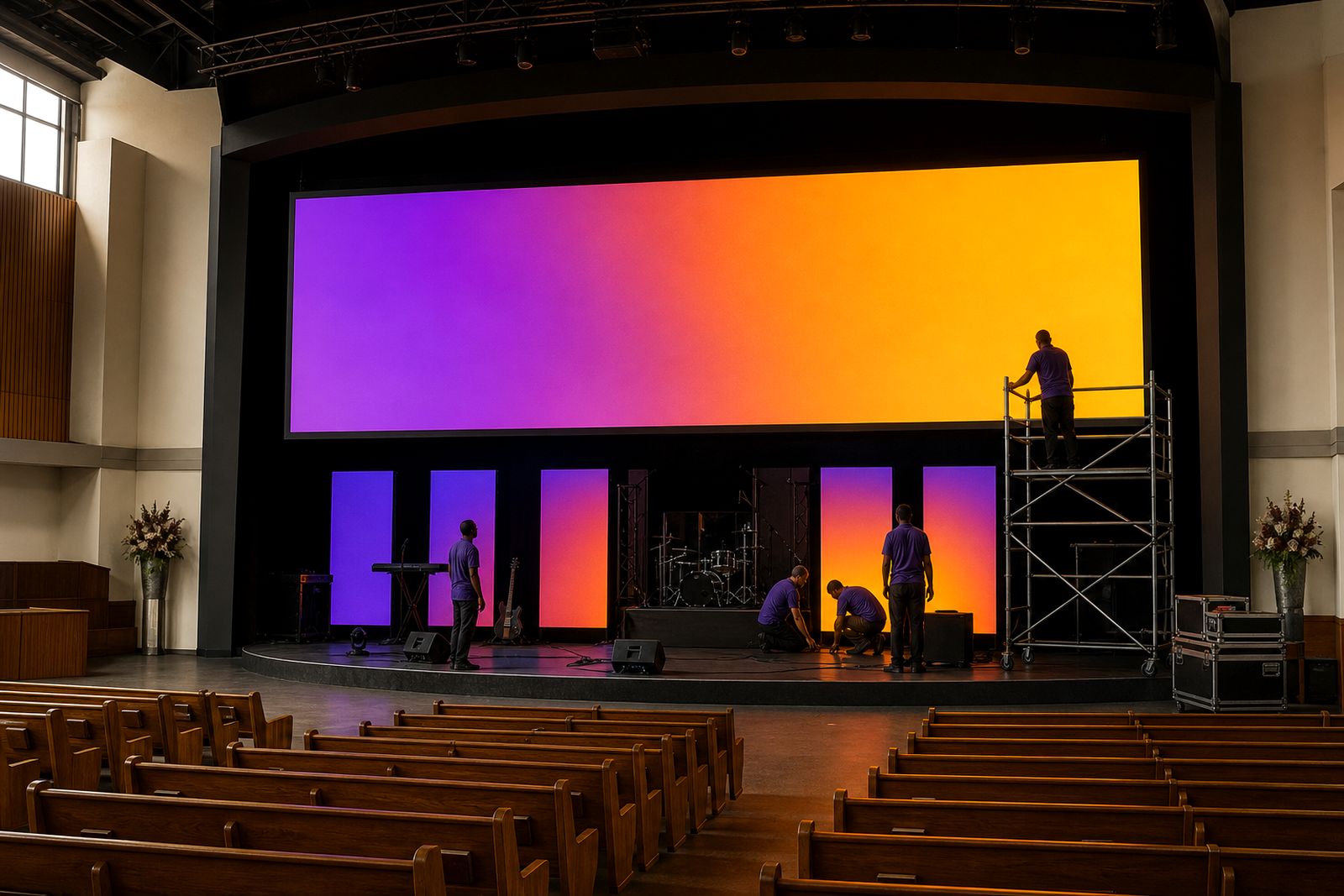
When projection starts falling short
Many churches and auditoriums were planned around projection screens, but room use changes over time. Day services, side windows, ceiling lighting and longer throws can leave the image washed out, with pale whites and weak contrast. In a big room that usually means people at the back lose fine detail first, while those seated off to the sides struggle with text clarity.
An indoor LED wall changes the way the screen performs in that space. Instead of relying on a beam crossing the room, the display itself produces the image directly. That matters in halls where lighting cannot always be dimmed and where the programme shifts between lyrics, scripture, notices, live camera shots and speaker presentation slides. You get steadier colour, darker blacks and text that stays easier to read even when the room is not fully dark.
- Better visibility during daytime services and rehearsals
- Clearer song lyrics and sermon points at long viewing distances
- Fewer issues with shadows, projector alignment and dull corners
- A neater front-of-room layout where the display becomes part of the stage wall
Matching pixel pitch to the room, not just the brochure
Churches and auditoriums do not all need the finest pitch on offer. The right choice depends on the nearest seating, the farthest seating, the size of text on screen and how often cameras are used for image magnification. In a compact auditorium with front rows close to the platform, a finer pitch can make a visible difference. In a wider hall where most viewers sit several metres back, a slightly larger pitch may still look excellent and keep the wall size within the project budget.
We look at the room in practical terms: where the first row starts, where the operator wants lyric text to sit, how large lower-third captions will be, and whether the wall will carry full-screen video every week. A display that looks sharp in a showroom can behave very differently once it is mounted above a stage and viewed across twenty or thirty metres, so planning matters more than sales language.
- Fine pitch suits closer seating and detailed graphics
- Standard indoor pitch often works well for deeper rooms
- Text-heavy use needs careful font and layout planning
- Live camera feeds benefit from even colour and clean motion handling
Screen size, aspect ratio and the stage wall
One of the biggest mistakes in auditorium work is choosing a wall shape before checking the actual content. Sermon notes, scripture references and lyric layouts usually favour a different format from cinematic background video. A very tall display can waste usable image area, while an ultra-wide format may leave notices and captions too small if they are not designed properly.
For churches, we normally start with the stage opening, the visible height above musicians or speakers, and the sightlines from the side seating blocks. In some rooms the best result is a single central wall. In others, side screens or confidence monitors may still be needed for the worship team and the operator. The mounting structure also has to respect existing finishes, ceiling bulkheads and access points for servicing, because a wall that looks good on paper can be awkward to maintain once it is hard against a decorative front.
Auditoriums used for school functions, graduations or hired events often need more than one content layout. That is where the processor and playback setup matter. Switching from a worship service layout to a conference backdrop should not mean rebuilding the whole screen plan every time.
A workshop example from a large Gauteng hall
One recent workshop build involved an indoor wall for a deep hall in Gauteng where a projector had been fighting with ambient light from high side windows. The room was used for worship on weekends, choir rehearsals during the week and community events on selected evenings. The old image looked acceptable during a darkened test, but normal operation was another story. Lyrics lost contrast, camera shots looked flat and the back third of the hall carried most of the complaints.
After the site survey, the brief shifted away from trying to recreate the old screen size exactly. The better answer was a proportioned LED wall mounted lower and wider, with a processor setup that allowed lyric templates, scripture slides and camera feeds to sit correctly on the new canvas. The structure was planned around the stage finish so access panels and cable routes stayed tidy. During testing, the operator checked worship slides from several seating positions rather than only from the control point, which picked up a text size issue early enough to correct it. That small change made the whole system read better across the room.
What mattered most was not maximum brightness alone. It was the combination of screen height, pitch choice, content layout and viewing angle. Once those worked together the room felt easier to use, and there was less pressure to darken the space for every programme item.
Installation points that matter in South African venues
Local site conditions are not all the same. A church in a mall precinct, a school auditorium in Pretoria, and a coastal venue near Gqeberha or Durban each bring different practical issues. Humidity near the coast affects service planning and housekeeping. Older halls may have wall surfaces that look solid but need a proper structural check before frames are fixed. In some venues, power distribution at the stage has been extended piece by piece over time, and that needs to be reviewed before the wall, processing and playback equipment are added.
- Structural fixing must match the actual wall build-up, not assumptions
- Cable routes should allow clean service access behind or beside the display
- Ventilation around processors and playback hardware needs proper allowance
- Control positions must give the operator a true view of the screen
- Municipal venue rules may affect working hours and access equipment on site
Where loadshedding planning is part of the wider venue setup, the screen system also needs to sit sensibly within backed-up power arrangements. That discussion is less about marketing terms and more about what the hall can realistically support during services and events.
What to settle before moving from projector to LED
The best LED wall projects are the ones where the church or venue team decides early what the screen must do every week. Is it mainly for lyrics and speaking notes, or will it carry IMAG, event branding and conference sessions as well? Will the room host outside productions that bring their own switchers and media playback? Those answers affect the wall size, processing path and mounting method.
It also helps to decide who will run the system on a normal service. A display can be technically excellent and still feel clumsy if the content workflow is too complicated for the volunteer or operator on duty. Good planning keeps the screen practical for weekly use, not just impressive on handover day.
If your church or auditorium is weighing up a move from dim projection to an indoor LED wall, our team can assess the room, the viewing distances and the programme mix. You can send the venue details through our contact form for a site-led recommendation that fits the way the hall is actually used.
What our LED Video Walls customers say
Verified Google reviews
Questions we get asked
Are LED walls better than projectors for churches?
In many large or bright rooms, yes. An indoor LED wall usually gives stronger brightness, better contrast and clearer text than projection, especially where the throw is long or daylight enters the hall.
Can an auditorium LED wall show lyrics, scripture and live camera feeds?
Yes. With the right processor and playback setup, the wall can handle song lyrics, notices, presentation slides and live camera images in different layouts suited to the room.
Do you install church LED walls outside Gauteng?
Yes. We work from Randburg in Johannesburg and ship, install and support indoor LED video walls in every province, with site planning matched to the venue layout and access conditions.
Also worth a look
Tell us about the job
Send sizes, materials and where you are through our contact form, and we will come back with the practical options.
Open the contact form