

Support and servicing
A well-run LED video wall needs more than a neat installation. Our support and servicing work covers fault finding, module swaps, colour and brightness correction, routine checks and practical maintenance planning for indoor walls across South Africa.
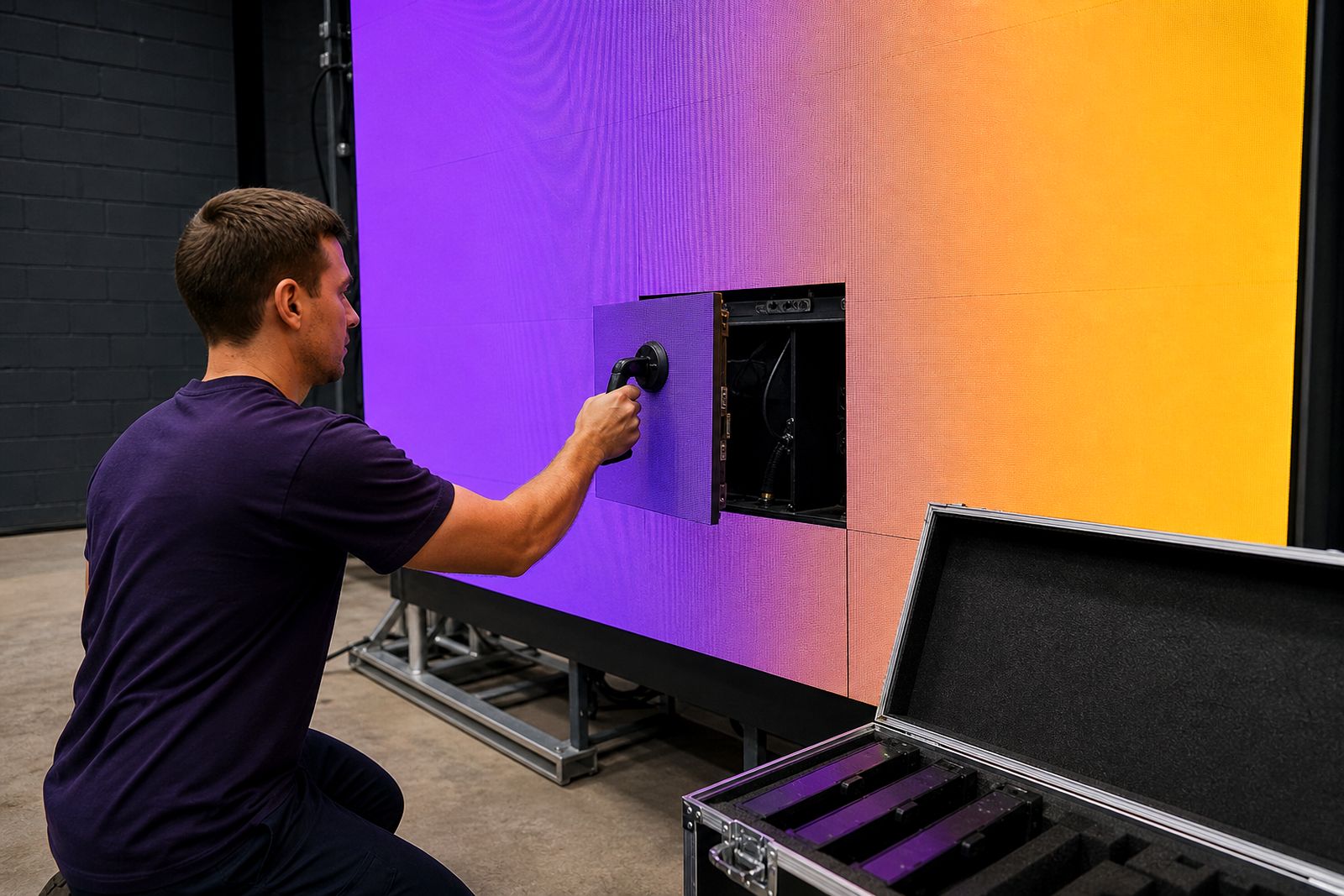
What our support work includes
Support starts with the actual wall in front of us, not a generic checklist. We work on indoor LED video wall systems used in boardrooms, conference rooms, retail stores, malls, churches, clubs, studios and event venues, covering the panels themselves as well as the signal chain that feeds them.
That can mean tracing a dead section, replacing a damaged module, checking receiving cards, resetting configuration, correcting uneven brightness or sorting out a processor setting that leaves part of the wall mapped incorrectly. On permanent installations we also inspect frames, power distribution, cable routing and access points so the wall can be serviced without unnecessary disruption.
- Fault diagnosis on indoor LED panels, power supplies, data paths and control settings
- Module swaps for dead pixels, impact damage, colour drift or line faults
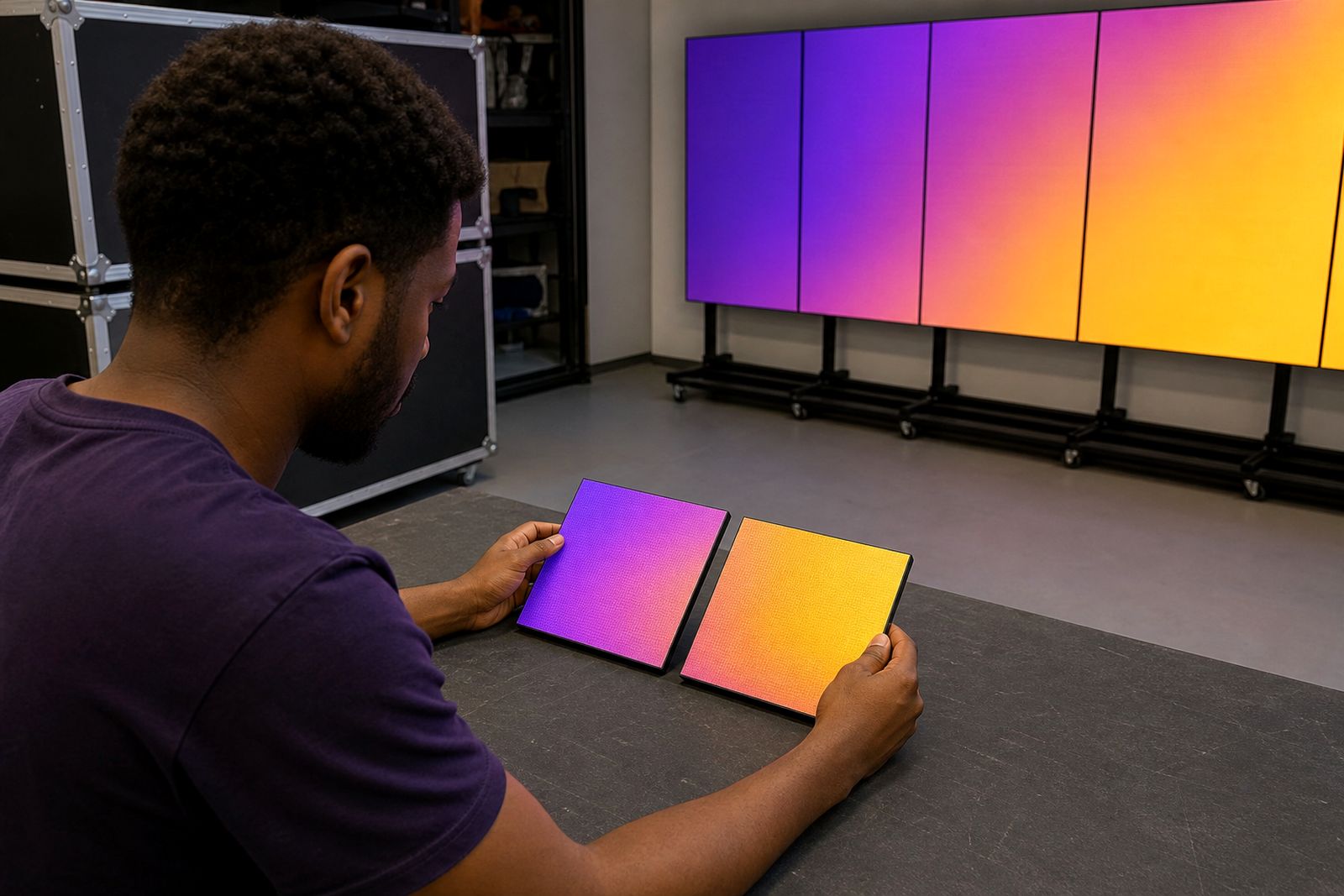
- Calibration for brightness consistency, colour balance and grey scale uniformity
- Processor and controller checks, including input setup and screen mapping
- Routine maintenance visits for cleaning, reseating, inspection and logging
- Support for rental-ready indoor panels used repeatedly in venues and event setups
We do not service outdoor billboards, TVs or projectors, and we do not create the video content played on the wall.
How a service call is handled
Each job follows a clear sequence so the right parts, access gear and test material are on site from the start. Smaller faults can be isolated quickly, while larger walls in corporate and retail settings usually need a structured visit that keeps the display available for trading hours or scheduled meetings.
- Initial review of the problem reported through our contact form, with panel type, wall size and site location
- Check of symptoms such as black modules, flicker, colour mismatch, mapping errors or intermittent signal loss
- Site visit or planned support attendance by a technician with test equipment and common service parts
- Isolation of the fault to module, cabling, power, receiving card, sender setup or content playback source
- Replacement, recalibration and verification across the full display area
- Handover notes so the client knows what was changed and what to monitor next
Where a wall is built into joinery or a recess, access planning matters almost as much as the electronics. Front service and rear service walls are handled differently and that affects labour time, lifting method and shutdown windows a bit.
What the client should prepare before we arrive
Good preparation saves site time and avoids avoidable strip-down work. If the wall sits in a boardroom or church stage, please note the usable access space, any booking restrictions and whether ladders or mobile platforms can be positioned safely in front of or behind the display.
It also helps to tell us whether the fault is constant or only shows under certain inputs. A wall that fails only on one HDMI feed needs a different starting point from a wall with random module dropout across several columns.
- Site address, contact person on site and access hours for the building
- Approximate wall dimensions in metres and panel layout if known
- Photos of the full wall and close images of the fault area
- Description of the control chain, including processor, playback device and switching equipment
- Notice of restricted access ceilings, mall rules, church service times or venue shutdown periods
- Confirmation that mains supply to the wall can be isolated if needed during testing
If spare modules or cards were supplied with the original installation, keep them available for the visit. Matching batches can make colour correction easier after a swap.
Service pricing in practical terms
Service pricing depends on the wall configuration and the work needed rather than a flat figure. A single front-service module replacement on a small meeting room wall is priced very differently from a calibration and component change on a large retail display with after-hours access rules.
In general, pricing is worked out from the call-out location, time on site, access complexity, number of technicians required, service parts used and whether special lifting or after-hours attendance is necessary. Processor reconfiguration and screen remapping are usually labour items, while damaged LED modules, power units and receiving cards are parts-based items. If a wall needs a broader clean-up after poor ventilation or heavy dust build-up, that is quoted on the actual condition found.
For sites with several indoor walls, planned maintenance can be structured as scheduled visits rather than ad hoc fault calls. That gives facilities teams a clearer service record and helps catch drift, loose connectors and heat-related issues before a visible failure appears.
Technical checks and service specifications
Indoor LED walls are made up of interdependent parts, so servicing is not only about the failed module. We check the display as a system. That includes visual performance, signal stability and the condition of the service route behind or in front of the screen.
Typical technical checks include pixel integrity, scan and refresh behaviour, cabinet alignment, magnetic or screw fixing condition, receiving card communication, power rail stability and brightness matching across adjacent modules. On fine pitch walls used close to viewers, even small colour variance can stand out badly, so calibration needs a careful eye and proper test material.
Where content playback forms part of the installation, we also confirm output resolution and scaling so the wall is fed at the correct canvas size. A good LED wall can still look poor if the source setup is wrong.
Aftercare and planned maintenance
After the repair or maintenance visit, we record what was replaced, what was adjusted and what should be watched over the next operating period. That is useful for church technical teams, office facilities staff and venue operators who need continuity even when different people run the system week to week.
Planned maintenance is especially worthwhile on walls used daily or switched on for long trading hours. Heat, dust and repeated content changes do not destroy a wall overnight, but they do affect consistency over time. A regular maintenance plan helps keep colour evenness, image stability and service access in order before the next fault becomes obvious to an audience.
If you need support for an indoor LED wall in Randburg, elsewhere in Gauteng or in another province, send the wall details and fault notes through our contact form. We will assess the service scope from the installation type and site conditions.
What our LED Video Walls customers say
Verified Google reviews
Questions we get asked
Can you service a wall that was not installed by your team?
Yes, provided it is an indoor LED video wall and parts access is practical. We first assess the panel type, service method and fault symptoms before confirming the scope of work.
Do you keep walls running during trading or event hours?
Where site conditions allow, we plan around the venue schedule. Some faults can be isolated with part of the wall live, while calibration, mapping changes or safe module removal may require a controlled shutdown.
What details should I send for a support request?
Please send the site location, wall use, approximate size, clear photos, the visible fault and any known processor or playback details through our contact form. Access restrictions and preferred service windows are also helpful.
Also worth a look
Tell us about the job
Send sizes, materials and where you are through our contact form, and we will come back with the practical options.
Open the contact form