

LED walls for events, clubs and venues
Indoor LED walls change the way a venue carries light, motion and branding across a room. For stages, clubs and corporate functions, the right panel build and control setup matter far more than headline brightness on a spec sheet.
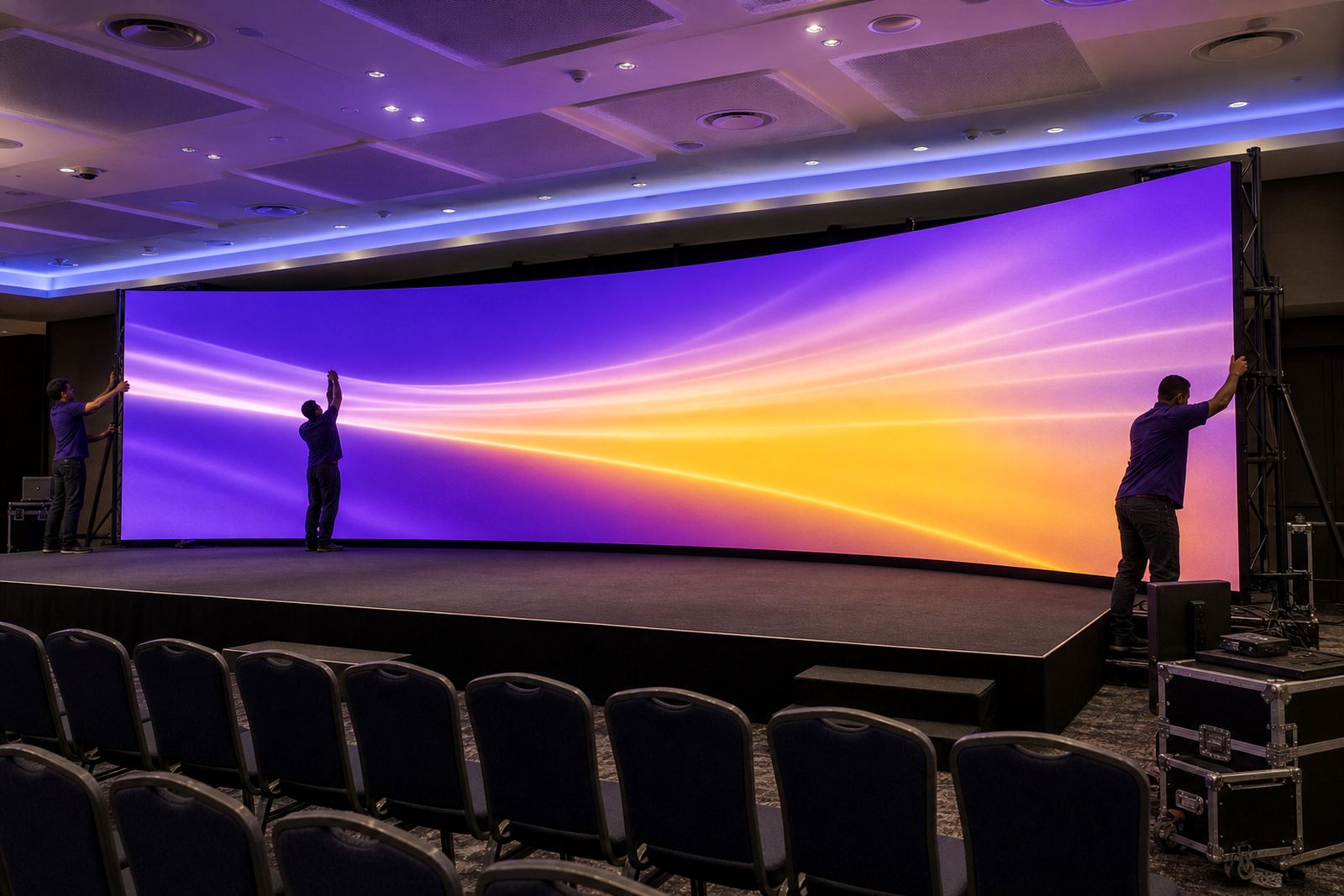
Stage backdrops need more than a bright picture
A stage screen has to read properly from the front row and the back of the room while sitting neatly with truss, lighting bars and camera sightlines. In a ballroom, conference venue or live room, the panel choice affects not only image quality but also how quickly the wall can be built, trimmed and aligned before doors open. Fine seams, consistent colour and stable processing make the difference when presenters move across stage or when motion graphics fill the full width.
For corporate events, the wall often carries presentation content one moment and branded motion the next. That means the screen must handle mixed content cleanly, including small text, logos, skin tones and wide background graphics. In entertainment spaces the demand shifts slightly. Motion is heavier, colours are bolder and the wall may run late into the night under heat from lighting rigs and packed crowds, so panel ventilation and access planning become just as important as pitch selection.
- Stage backdrops should suit the viewing distance and camera use.
- Panel joins must stay even across the full wall width.
- Processing should scale cleanly from laptops, media players and vision mixers.
- Mounting needs to account for trim height, stage access and safety zones.
Clubs and venue interiors place different demands on a wall
A club wall is not a boardroom screen moved into a darker room. Sightlines are wider, ambient lighting changes all night and the screen often works close to the audience. People stand underneath it, dance in front of it and photograph it from sharp side angles. That puts pressure on cabinet alignment, mask tolerances and black level consistency, especially where dark scenes cut quickly into bright animated content.
Indoor venue walls also need practical access for servicing. In many Johannesburg and Pretoria venues, the wall is built into joinery, behind a DJ position or along a stage return where rear access is limited. Front-service panels can make a big difference in these spaces, but only if the framing was planned correctly from the start. A wall that looks neat on opening night can become a maintenance headache later if power supplies, receiving cards or data runs are trapped behind ceilings, counters or decorative cladding.
Humidity matters too. Coastal venues in Durban, Gqeberha and Cape Town can expose indoor electronics to a damp salt-laden environment, and that should shape cabinet finish, installation spacing and routine cleaning intervals. Those details are not glamorous, but they stop small faults from becoming a dead line across the screen on a busy Friday.
Getting the pixel pitch right for indoor event use
Pitch choice should start with audience distance, screen size and the type of content on show. For a compact launch event with guests standing quite close to the stage, a finer pitch gives a smoother image and cleaner text. For a larger hall where the audience sits several metres back, a standard indoor pitch can be the better fit, especially where the wall needs to be built and struck regularly.
There is no single best pitch for every venue. A church auditorium, nightclub and awards stage may all use indoor LED, but the job brief changes. Camera coverage, lectern text, sponsor logos and kinetic visuals all place different demands on the wall. We usually look at the room first, then the content path, then the physical build.
- Close audience positions usually favour a finer pitch.
- Frequent rental handling calls for cabinets that lock and align quickly.
- Presentation-heavy shows need crisp rendering for text and line graphics.
- Wide dancefloor visuals may prioritise scale and impact over tiny detail.
Control, playback and signal flow in a live room
An impressive panel wall can still disappoint if the signal chain is poorly planned. Venues often feed content from a presentation laptop, a playback machine, a camera switcher or a house control rack. The processor must accept the right inputs, map the wall correctly and maintain stable output through long event days. Resolution planning matters here. A wall built to a custom aspect ratio should be matched to the content workflow so operators are not stretching slides or cropping video at the last minute.
For clubs and live entertainment spaces, content playback often runs continuously with loops, scheduled scenes or operator-triggered changes. That setup needs a tidy rack layout, labelled cabling and sensible power distribution. During load-shedding planning, indoor venue systems may need clear shutdown and restart procedures where the site runs on backup power, because processors and playback hardware do not all recover in the same way after an abrupt drop. One loose settings step can leave half the wall mapped incorrectly, which is a rotten surprise ten minutes before doors.
Good control planning also considers who will run the system after handover. A permanent venue wall should not depend on a complicated sequence that only one technician understands.
A workshop example from a Gauteng venue fit-out
One recent indoor build from our Randburg side involved a medium-width stage wall for a venue that hosts product launches during the week and music-driven events over weekends. The room had a low bulkhead, limited rear access and a polished floor that reflected stray light badly. The first request was simply for a large bright wall, but the site survey showed that cabinet depth, trim height and processor location would decide whether the installation felt tidy or improvised.
We reworked the wall size to suit the actual sightline from the back seating block, not just the stage width. The mounting frame was set to keep the bottom edge clear of moving presenters while leaving enough service access at the sides. Control hardware was placed in a lockable rack position with short clean cable runs to avoid a nest of adaptors behind the stage. During test content, dark gradients exposed one alignment issue across the upper row and that was corrected before handover, which is exacty the sort of small snag worth catching early.
After the install, the venue team had one operating mode for conference use and another for nightlife visuals. That split matters in real venues. A room that changes purpose during the week needs the screen system to change with it, without someone rebuilding the content path every time.
What to settle before the wall is built
Most venue problems start long before the first panel is hung. The room use, access route and operating pattern should be agreed while the wall is still on paper. Indoor LED is very flexible, but it still needs proper allowances for structure, ventilation, control gear and servicing. Municipal venue rules, shopping centre access windows and after-hours installation limits can also shape the plan, especially for mall activations and mixed-use sites.
- Confirm whether the wall is permanent, semi-permanent or rental-ready.
- Measure the true viewing positions, not only the room dimensions.
- Allow for processors, playback equipment and protected cable routes.
- Check access for ladders, lifts, truss and panel cases.
- Plan front or rear servicing before any decorative finishes are closed up.
- Match the screen format to the content you will actually run.
For venues across Gauteng and further afield, we handle indoor LED wall supply, design, installation and support with the practical site details in mind. If you are planning a stage backdrop, club feature wall or event screen, send the room notes through our contact form and we can review the likely panel format and control layout.
What our LED Video Walls customers say
Verified Google reviews
Questions we get asked
Are these LED walls suitable for both corporate events and nightlife venues?
Yes. The same indoor LED technology can be configured for presentation-led events, branded launches, club interiors and live entertainment rooms, provided the pitch, wall size and control setup match the venue use.
Can an indoor LED wall be built into an existing stage or feature wall?
It can, but the framing and service access need to be planned carefully. Built-in walls often need front-service panels or side access so routine maintenance does not require joinery or bulkheads to be opened.
Do you handle installation outside Gauteng?
Yes. Our base is Randburg and we install and support indoor LED video walls across South Africa, including venues, churches, retail sites, studios and conference spaces in every province.
Also worth a look
Tell us about the job
Send sizes, materials and where you are through our contact form, and we will come back with the practical options.
Open the contact form