Standard indoor LED panels
Standard indoor LED panels are the everyday cabinet choice for walls that need bright, continuous visuals without moving into ultra-fine pixel pitch territory. They suit retail, worship and venue spaces where viewing distances are moderate and the wall needs to run reliably through long operating hours.
Built for regular indoor viewing
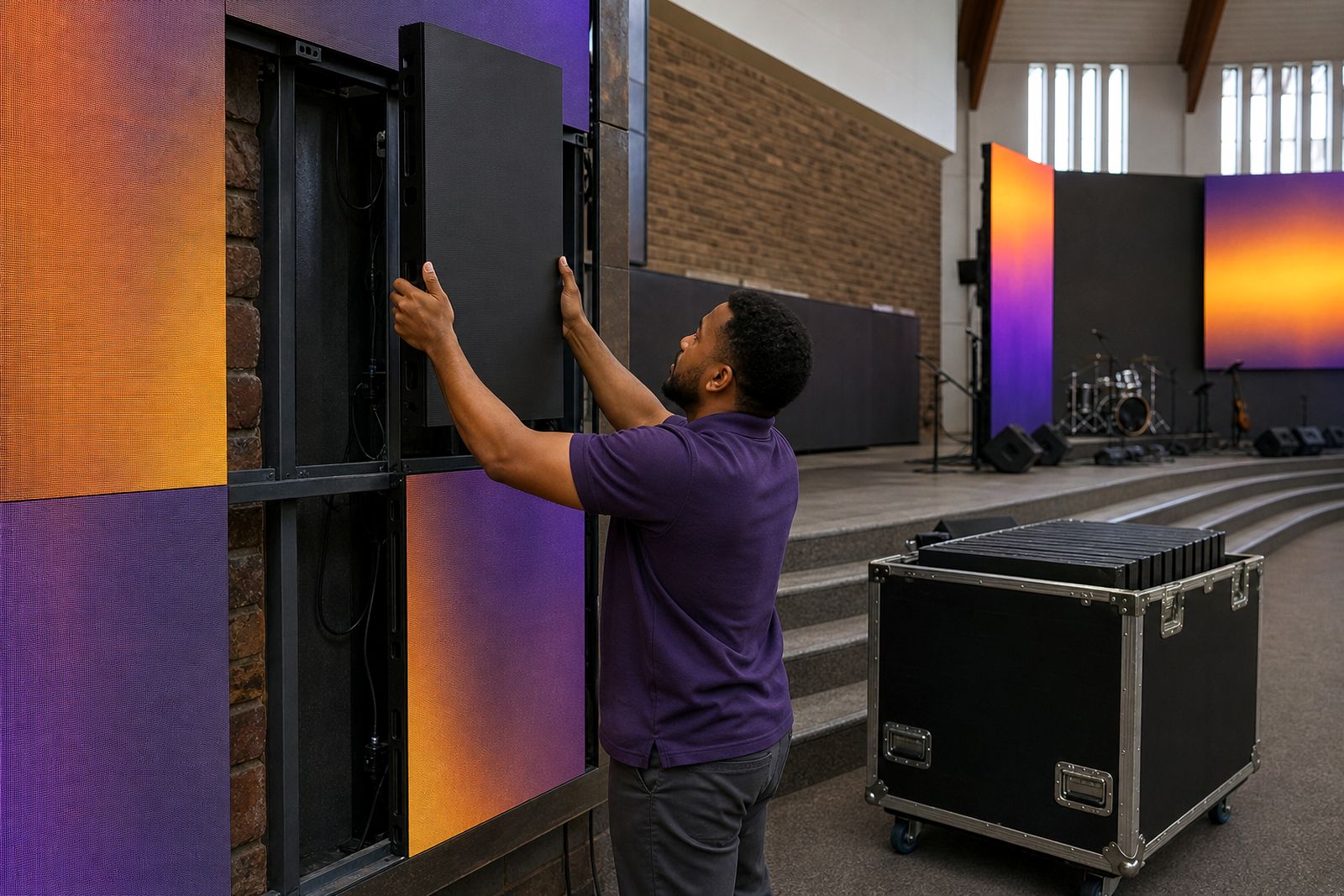
Standard indoor LED panels are modular cabinets assembled into a larger video wall. They are used where people view the screen from a few metres away rather than from the front row of a boardroom table. In shopping centres, church auditoriums and club interiors, this panel class gives strong brightness, clear colour and a tidy wall finish without the tighter pixel pitch usually reserved for close-up corporate work.
At LEDPanel Video, we supply these systems as complete indoor wall packages with panel cabinets, receiving hardware, processing, mounting structure and content playback where needed. The result is a screen intended for permanent installation, or in some cases a rental-ready layout for indoor event use. These are not outdoor billboard panels, and they are not a replacement for every boardroom display where very close seating is involved.
- Good fit for moderate viewing distances.
- Used for permanent walls and some indoor event setups.
- Available with processing and playback options.
- Intended for indoor environments with controlled weather exposure.
Cabinet formats, pixel pitch and working limits
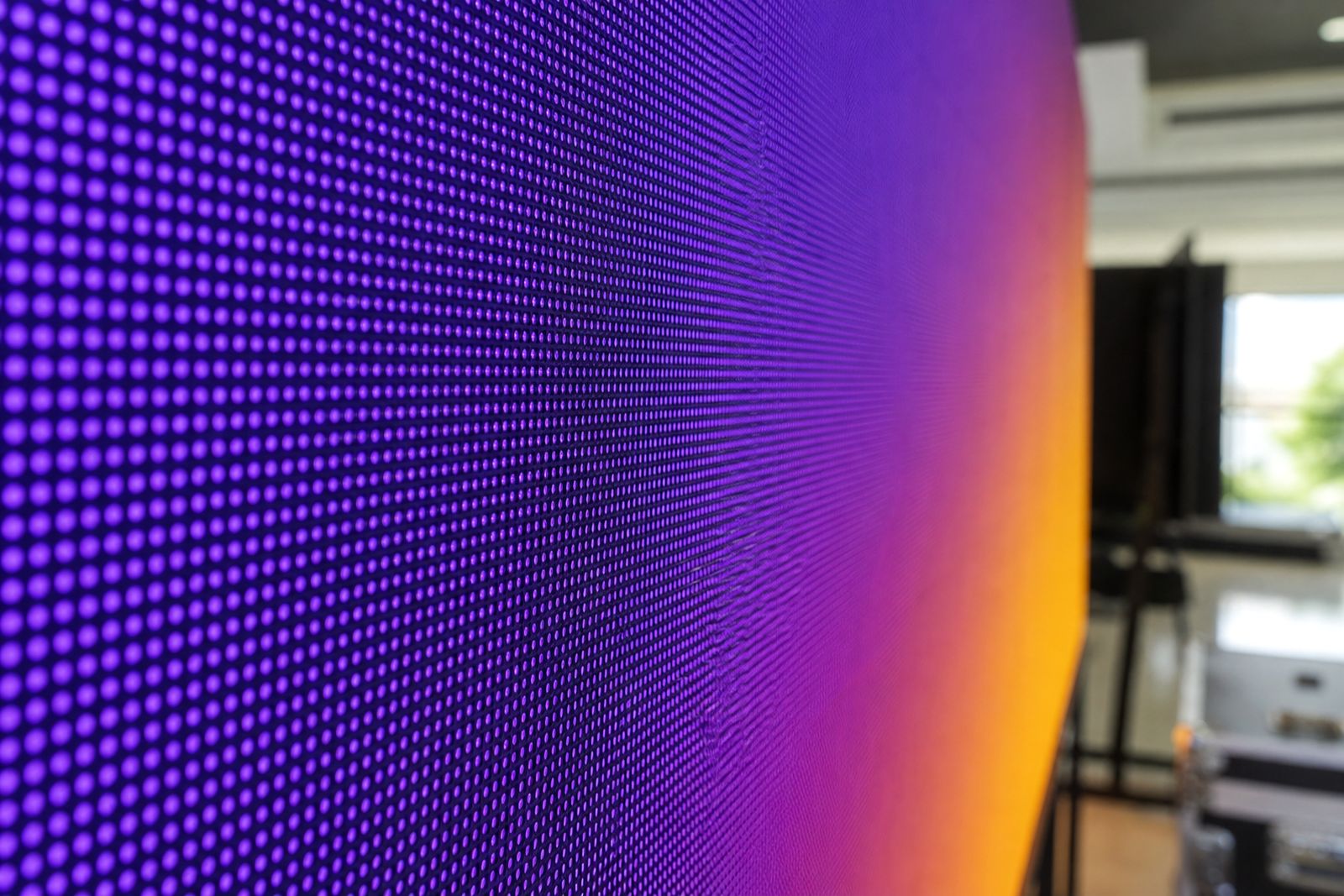
Standard indoor cabinets are commonly selected in pitch ranges such as P2.6, P2.9, P3.9 and P4.8, depending on the room size and how near the audience will stand. A finer figure means the LEDs sit closer together, giving a smoother picture at shorter distances. A larger figure usually lowers the visual benefit for near viewing, but can make good sense on a church stage wall or retail feature where the audience stands further back.
Cabinet dimensions vary by system, with common indoor sizes around 500 x 500 mm and 500 x 1 000 mm. Those sizes help with planning wall width and height in even module increments. Standard cabinets can form flat walls neatly, and some ranges allow gentle curves, though not every cabinet is meant for shaped installs so this needs to be checked early.
- P2.6 to P2.9 suits closer public viewing and many indoor feature walls.
- P3.9 to P4.8 suits larger rooms where the audience is further away.
- 500 x 500 mm cabinets help with square or compact layouts.
- 500 x 1 000 mm cabinets speed up larger wall builds and reduce join lines.
Working limits matter. These panels are not ideal for direct sunlight pouring through a glass shopfront, and they are not the right product for rain, dust-laden exterior loading areas or exposed concourses. If a viewer stands too close to a coarser pitch, the image can look grainy. If the content relies on tiny spreadsheet text, standard pitch may not be the right route.
Where these panels suit best
This panel category earns its place in spaces that need impact at scale. Retail stores use it for campaign loops, product launches and seasonal visuals. Churches and auditoriums use it for lyrics, scripture, camera feeds and stage backdrops. Clubs, studios and event venues use standard indoor panels for branding, motion backgrounds and live content where brightness and wall size matter more than ultra-close pixel density.
They are less suited to executive boardrooms with viewers seated very near the screen, and less suited to narrow corridors where people brush past the face of the wall. In those cases, fine pitch panels or a different display format may fit better. We also do not supply televisions, projectors or outdoor roadside signs, so the recommendation stays focused on indoor LED wall use.
- Retail stores and malls with feature display zones.
- Churches, halls and auditoriums with audience seating set back from the stage.
- Event venues, clubs and studios needing bright scenic video surfaces.
- Reception and foyer walls where the audience sees the full screen from a few metres back.
Wall preparation and installation details
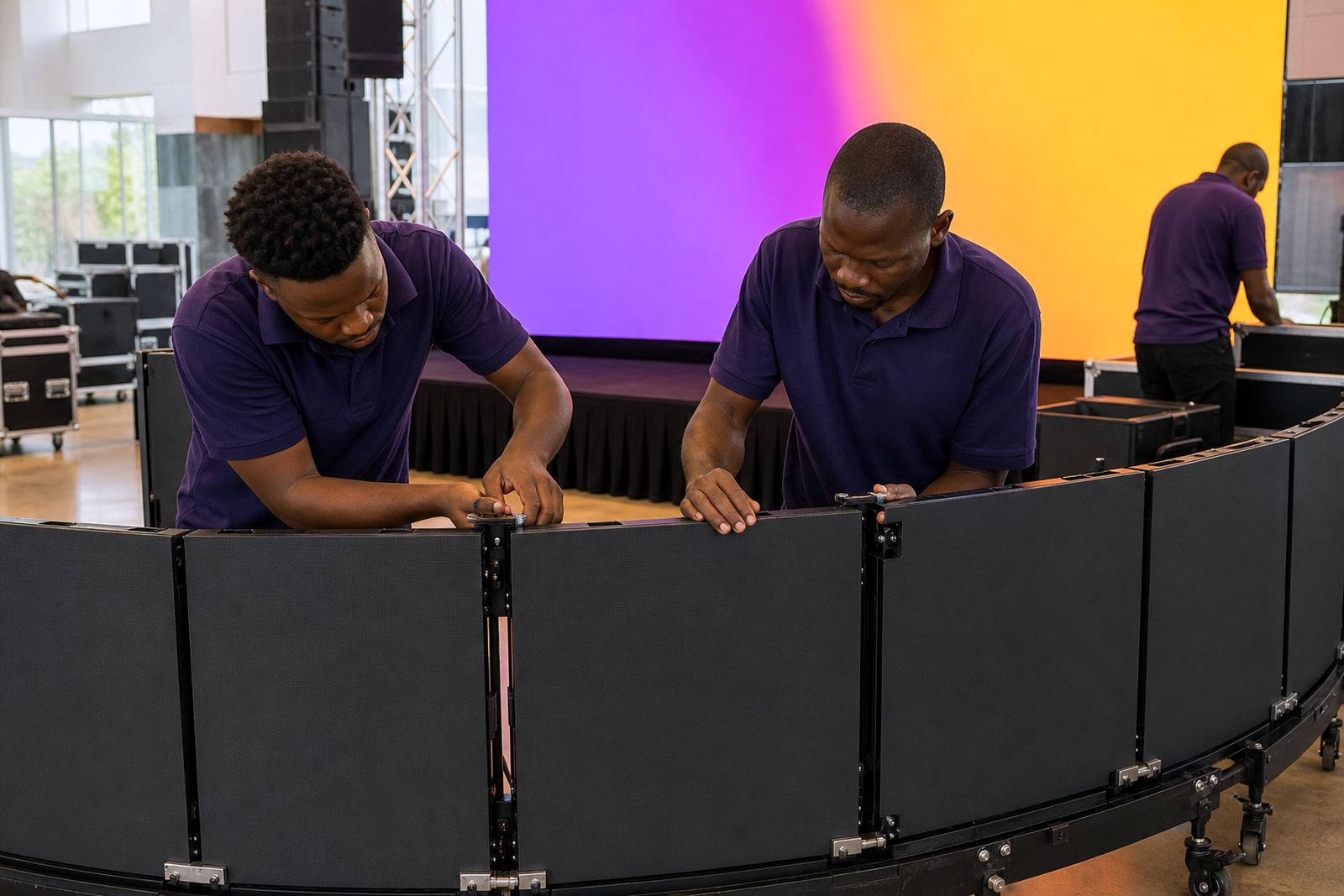
A good LED wall starts with the room, not only the cabinet spec. We look at sight lines, wall width, ceiling height, power access, ventilation and service access before fixing the final layout. Indoor LED walls draw mains power and they need stable electrical provision, clean cable routing and a structure suited to the final screen mass. In Gauteng retail centres and churches, municipal and centre rules can affect after-hours access, drilling times and route planning for bringing cabinets into the building.
Mounting may be wall-fixed, floor-supported or built onto a freestanding frame depending on the site. The chosen method must account for true wall condition, not just the architect's drawing. On some renovations we find uneven plaster, hidden columns or a bulkhead line that changes the usable screen height a bit.
- Final wall size should match cabinet module dimensions.
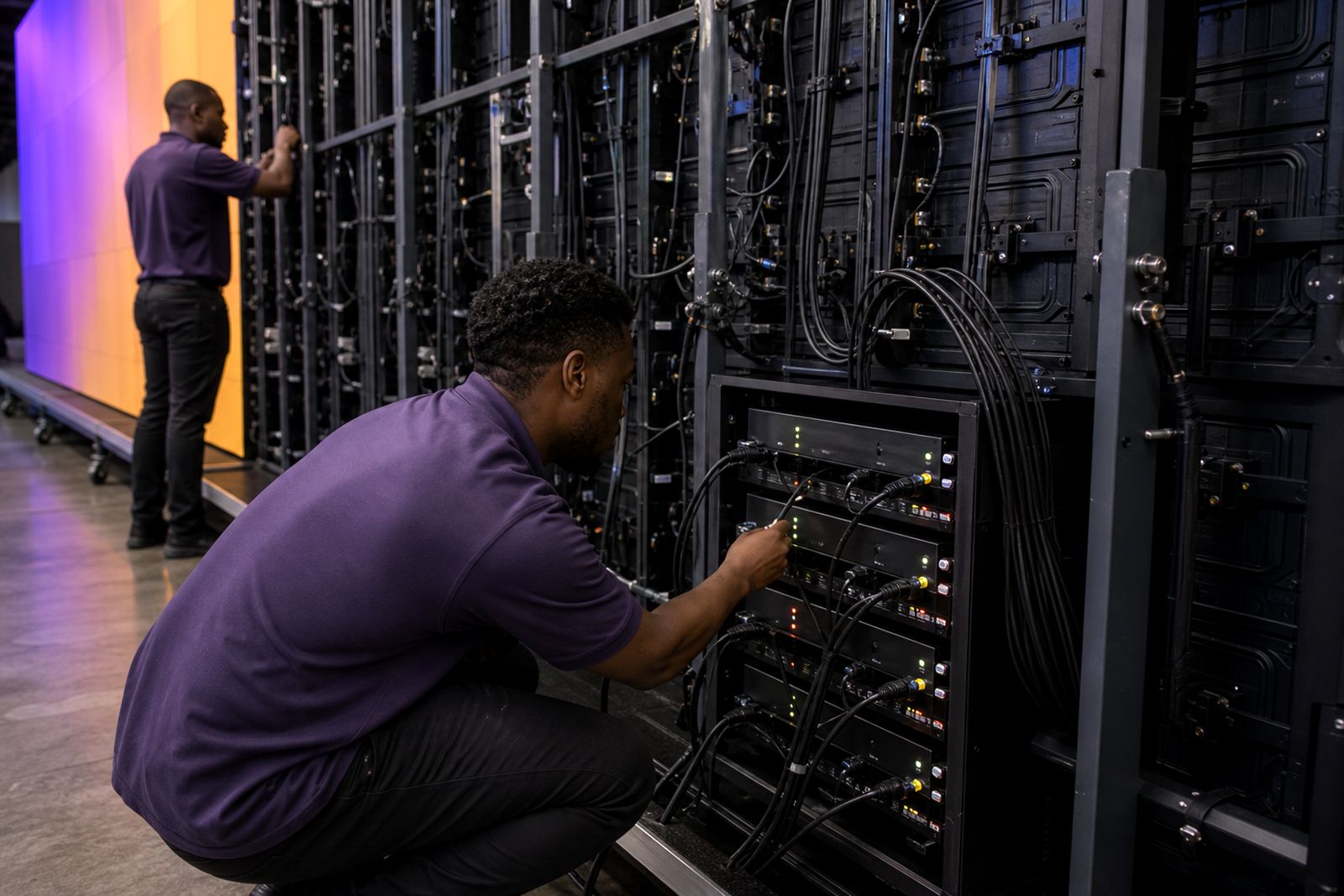
- Power circuits must be planned for the full screen load and control equipment.
- Ventilation and rear or front service access must be decided before fabrication.
- Content source points, control position and data runs should be mapped with the room layout.
Care, cleaning and steady operation
Standard indoor LED panels are made for regular use, but they still benefit from sensible care. Dust build-up on vents, heat trapped behind a flush wall, and poor cable strain relief can shorten the life of components. In busy venues the most common trouble is physical contact, especially on low-mounted walls near queuing areas or stage edges.
Cleaning should be dry and controlled, with the front surface treated carefully to avoid pressure damage on LEDs. A proper service visit usually checks cabinet alignment, module condition, signal chain, power distribution and processor settings. If the wall runs daily in a mall or worship venue, planned maintenance is easier than waiting for a visible fault on a Sunday service or Saturday night event.
Where utility interruptions are common the power path should be protected properly, because repeated harsh shutdowns are not kind to display electronics.
Details that help us size the right wall
When you enquire, the useful starting point is the room itself: width, height, viewing distance and the type of content you want to show. A stage lyric wall and a fashion retail wall may look similar from far away, but the best pitch, brightness and control setup can differ quite a lot. If you have a floor plan, photos of the wall and the distance to the nearest viewer, that helps narrow the panel range quickly.
It also helps to know whether the wall is permanent or expected to move between indoor venues. Let us know if the screen must sit flush against a finished wall, hang from a structure, or stand on a ground support frame. Send those details through our contact form and we can guide the specification from there.
- Wall width and height available in millimetres or metres.
- Nearest and furthest viewing distance.
- Main use: retail campaigns, worship lyrics, live camera feed, events or studio work.
- Preferred mounting method and any access limits for installation.
- Power location, content sources and whether playback is needed on site.
What our LED Video Walls customers say
Verified Google reviews
Questions we get asked
Are standard indoor LED panels suitable for a boardroom?
They can work in larger conference rooms where the nearest viewer is not too close to the wall. For tighter seating positions and detailed spreadsheet or small text work, fine pitch panels are usually the better choice.
Can these panels be used near a shopfront window?
They can be used inside a retail store, but direct sun onto the screen face can reduce viewing comfort and should be assessed during the site survey. Window position, ambient light and audience angle all matter.
Do you install these panels outside Gauteng?
Yes. Our base is in Randburg and we ship, install and support indoor LED video walls across every province, with the final method shaped by the site, access conditions and screen size.
Also worth a look
Tell us about the job
Send sizes, materials and where you are through our contact form, and we will come back with the practical options.
Open the contact form