Fine pitch LED panels
Fine pitch LED panels are built for spaces where people sit or stand close to the screen and still need a clean, detailed image. We supply and install indoor systems for boardrooms, control rooms, studios and other rooms where sharp text, charts and camera-friendly backgrounds matter.
Built for short viewing distances
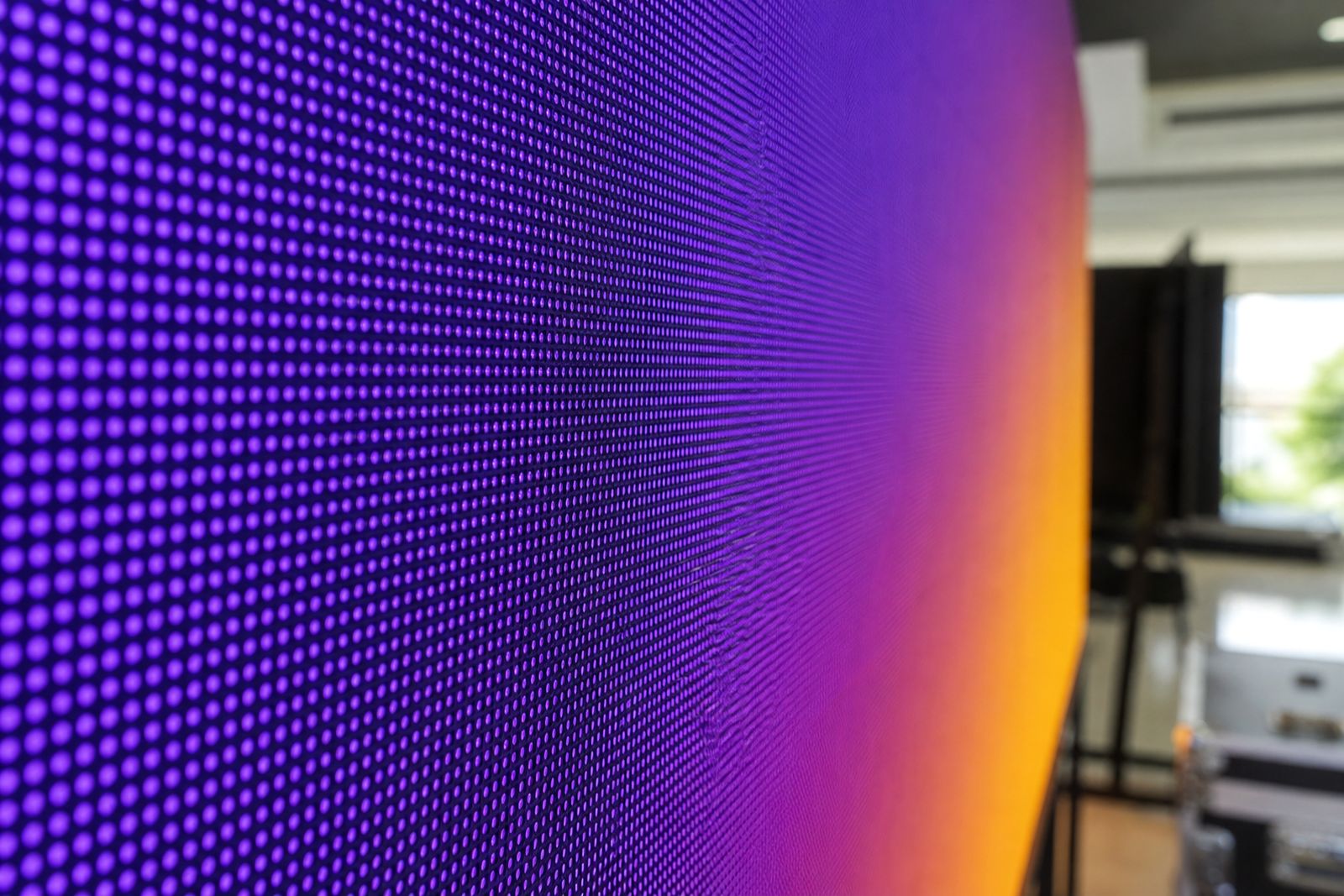
Fine pitch LED panels use a tighter pixel spacing than standard indoor panels, which makes them suitable where viewers are only a few metres from the wall. In a boardroom this matters for spreadsheets, dashboards and small type. In a studio it helps reduce visible pixel structure on camera, especially when presenters stand near the screen.
These panels are used indoors only. They are not the right product for outdoor billboards, and they are not a substitute for televisions where a small single screen is enough. When the display must cover a wide wall with a near-smooth image, LED starts to make more sense.
- Suited to close seating layouts and narrow rooms.
- Good for detailed graphics, presentation content and branded backdrops.
- Available for permanent installations and selected rental-ready indoor builds.
- Typically paired with a processor, mounting system and content playback source.
Pitch choices and practical size limits
The main choice on a fine pitch wall is pixel pitch. Smaller pitch gives higher resolution at a given wall size, but it also increases cost and places tighter demands on alignment and room planning. For many corporate rooms, common starting points are in the fine pitch range where viewers are roughly 1.5 to 4 metres away. Control rooms and broadcast environments may need tighter pitch where operators sit very close.
Panel modules and cabinets are combined to form the final wall, so the screen can be scaled to suit a feature wall, recessed opening or studio set. There is still a sensible limit though. Tiny walls with very fine pitch can be over-specified, while extremely large walls in compact rooms can push brightness and viewing comfort too far.
- Closer than about 2 metres usually calls for a finer pixel pitch.
- Rooms used mainly for PowerPoint, video calls and charts often balance well in the mid fine-pitch range.
- Studios benefit from careful camera tests, shutter settings and screen brightness setup.
- Very bright all-white content in a small dark room can feel harsh if the wall is oversized.
Where fine pitch works well, and where it does not
Boardrooms, conference rooms, executive briefing rooms and control centres are typical fits. So are studios where a clean indoor background is needed without obvious tile joins from normal viewing positions. Retail spaces can also use fine pitch for premium close-up displays near shopfronts or within mall walkways where foot traffic passes within a metre or two.
It is less suitable where content is viewed only from far away, where budgets are better matched to standard indoor panels, or where the wall is likely to be moved constantly between rough event sites. In churches and venues with long throw viewing, a larger pitch may do the job perfectly well. If the requirement is a small screen on a stand in a private office, a single display panel may be more practical.
Wall conditions, power and room planning
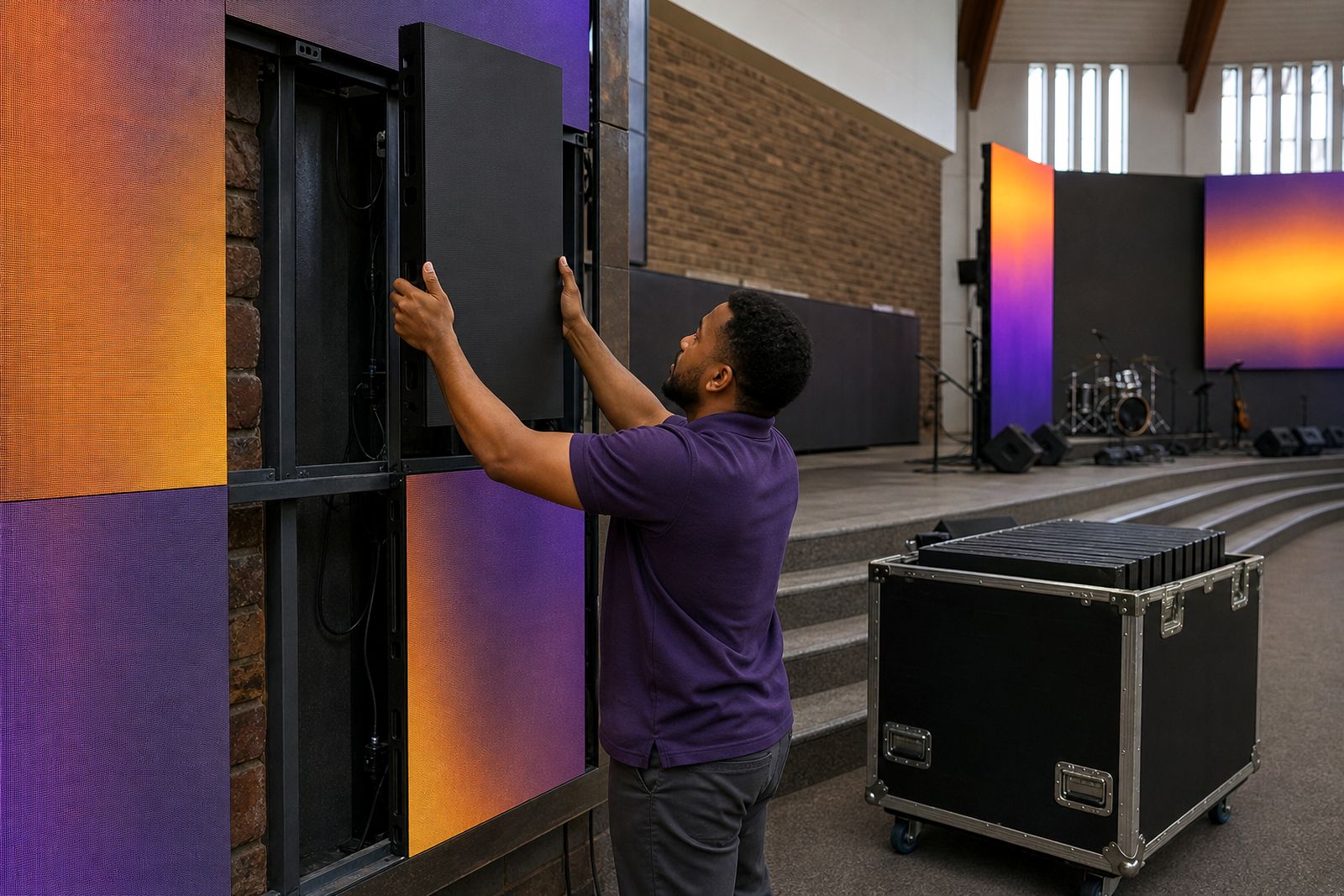
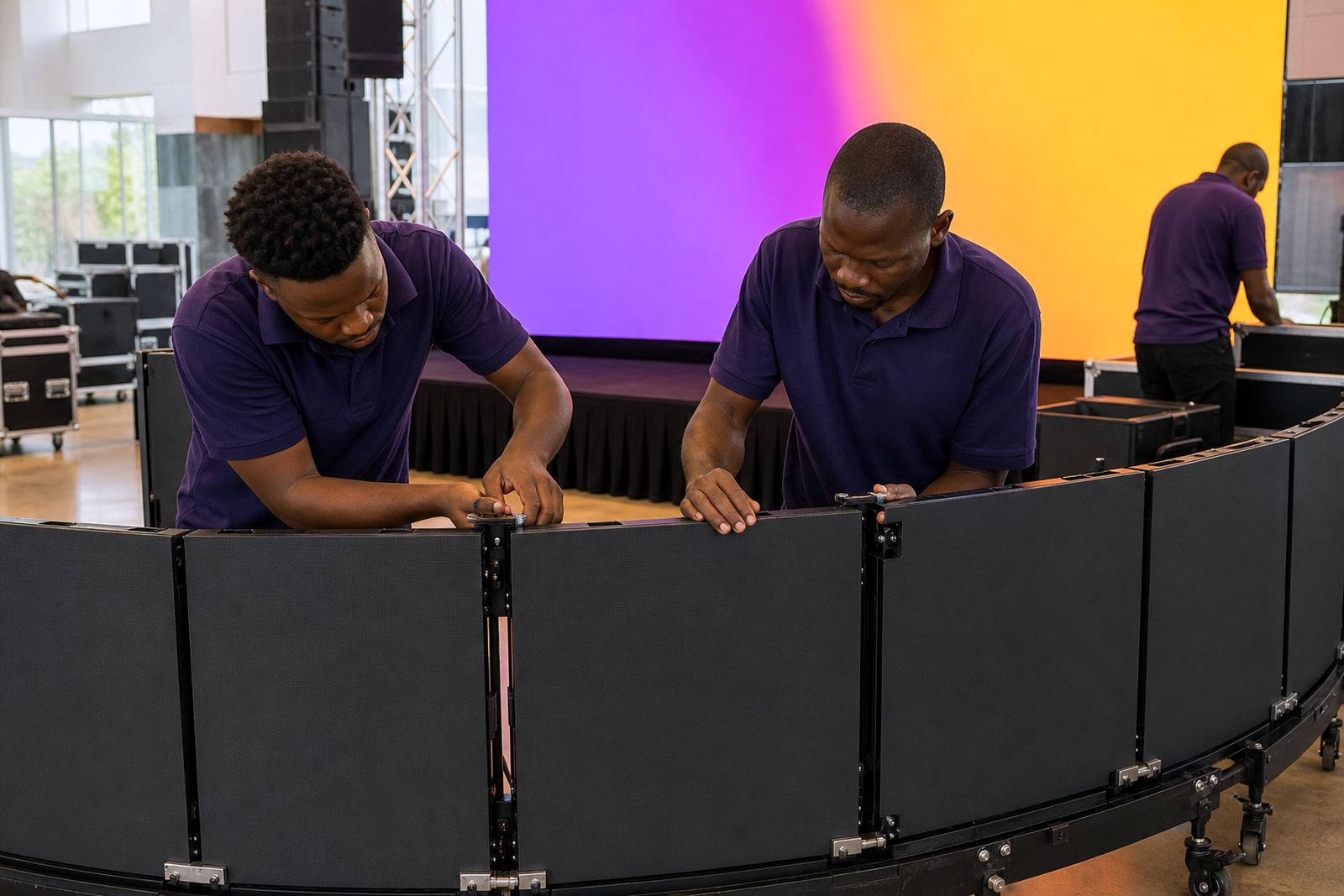
Fine pitch installations need a straighter mounting surface and tighter cabinet alignment than coarser products. We look at the wall build, recess depth, access route into the room, ventilation around the display and where the processing equipment will sit. In Johannesburg office parks this often means checking lift sizes, passage widths and whether work must be done after tenant trading hours.
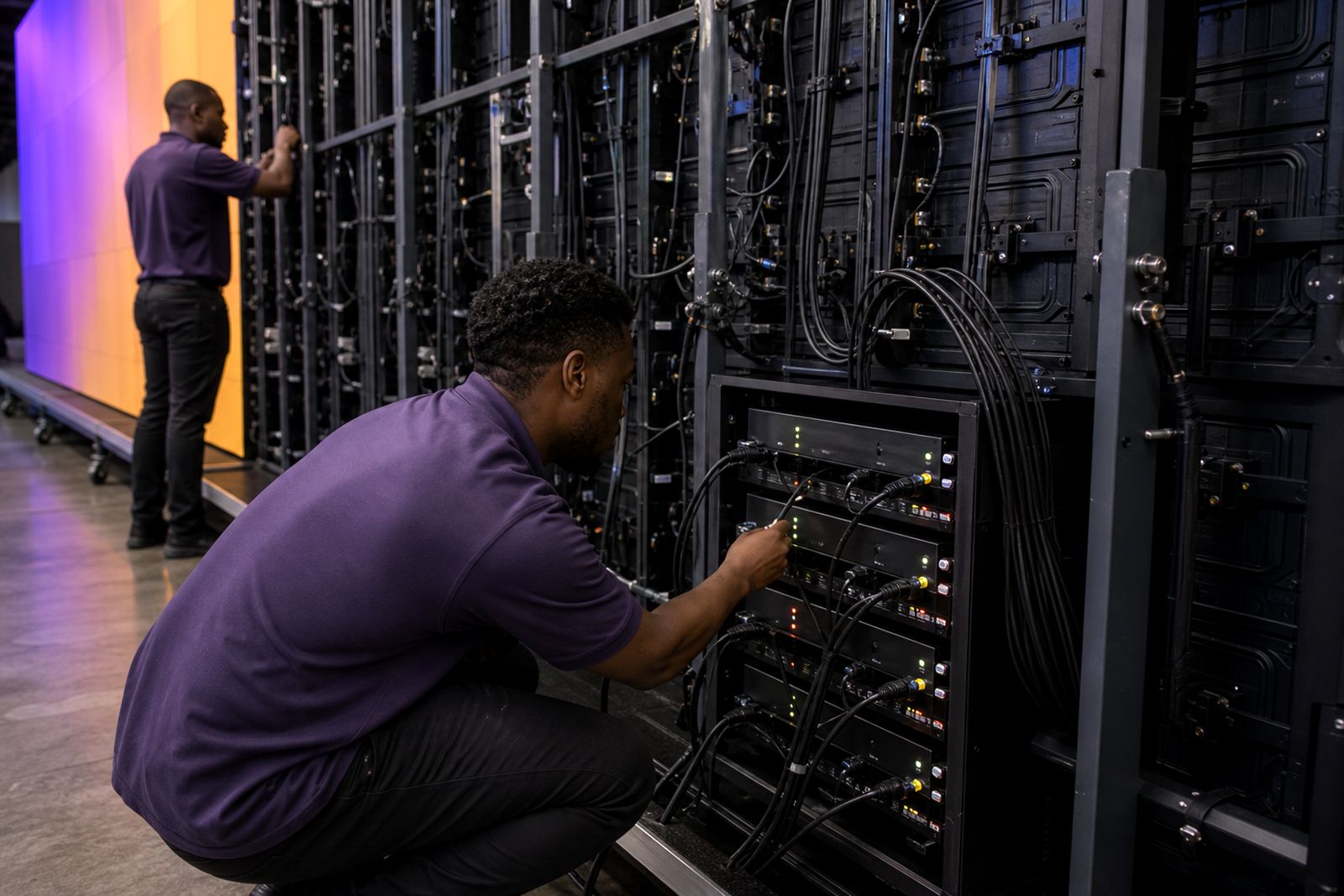
Power quality matters because the system runs on mains supply through processors and receiving hardware. We also plan cable paths, signal formats, control position and service access. Coastal humidity in Durban, Gqeberha and Cape Town is part of the discussion for any room that is not consistently conditioned, as indoor electronics do best in stable environments.
- Solid mounting structure with accurate level and plumb.
- Dedicated power circuits and sensible cable routing.
- Ventilation space where the wall is recessed or boxed in.
- Front or rear service access chosen before fabrication starts.
- Processor location close enough for stable signal management.
Looking after image quality over time
Indoor fine pitch panels should be kept clean with the right methods and used within sensible brightness levels for the room. Dust build-up, blocked airflow and repeated tampering with settings can shorten component life or cause uneven image appearance. In meeting rooms, a lot of problems start with other devices feeding the wall at odd resolutions, so content setup matters as much as the panel itself.
Studios and control rooms usually benefit from a fixed operating profile, with colour, brightness and source scaling set properly and then left alone. If a panel section is damaged, modular construction allows targeted service work rather than replacing an entire display, which is one of the practical strengths of LED walls.
Details that help us size the right wall
When you send an enquiry, include the room width, ceiling height, viewing distance and the approximate wall area available. Tell us whether the screen is for boardroom presentations, camera use, dashboards, worship lyrics, retail promotion or mixed daily content. A few phone photos of the room and the wall usually save a lot of back-and-forth.
It also helps to mention whether the screen will be wall-mounted, recessed, flown or built into joinery, and whether service access can be from the rear. If there is an existing video conferencing setup, matrix switcher or control system, note that too. You can send the project notes through our contact form on the contact page.
- Site address and province.
- Room use and typical audience distance.
- Preferred wall width and height in metres.
- Any drawings, renders or reflected ceiling plans.
- Source devices, control requirements and hours of use.
What our LED Video Walls customers say
Verified Google reviews
Questions we get asked
Is fine pitch LED better than a projector in a bright boardroom?
Often yes, especially where ambient light cannot be controlled well and the screen must stay clear during daytime presentations. The final choice still depends on wall size, seating distance and how detailed the content is.
Can fine pitch LED be used for video calls and presentation sharing?
Yes. These walls are commonly integrated with conferencing systems, presentation inputs and content playback sources so the room can switch between meetings, shared content and branded visuals.
Do fine pitch panels need a perfectly flat wall?
The finished mounting structure must be very accurate even if the existing wall is not. We plan the support frame and installation method around the room so cabinet alignment stays neat across the full display.
Also worth a look
Tell us about the job
Send sizes, materials and where you are through our contact form, and we will come back with the practical options.
Open the contact form