Rental and event LED panels
Rental and event LED panels are built for fast assembly, neat joins and bright indoor presentation on temporary stages, launches and exhibition stands. We supply complete indoor systems from Randburg with panels, rigging or ground support, processing and on-site installation support where needed.
Built for temporary indoor builds
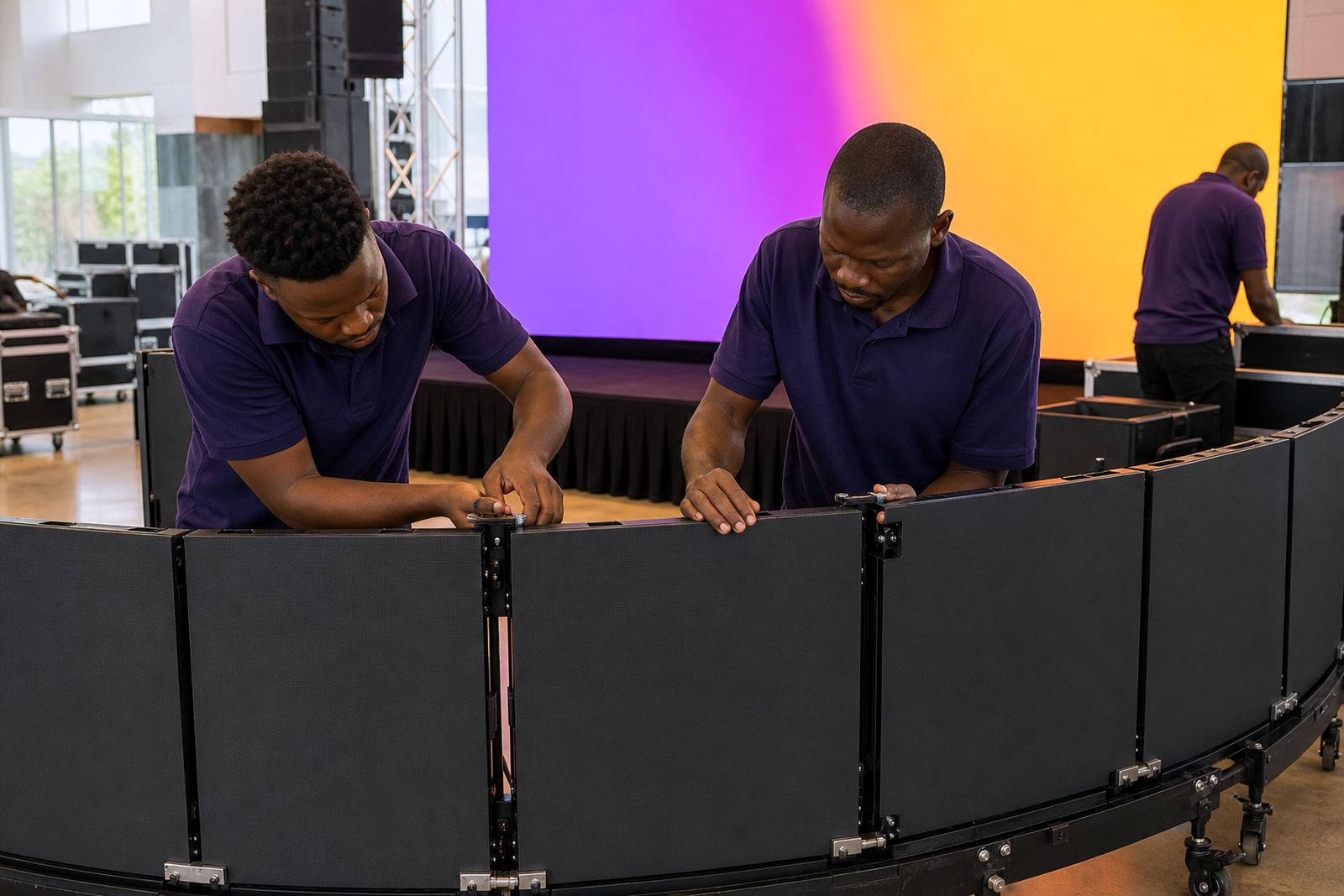
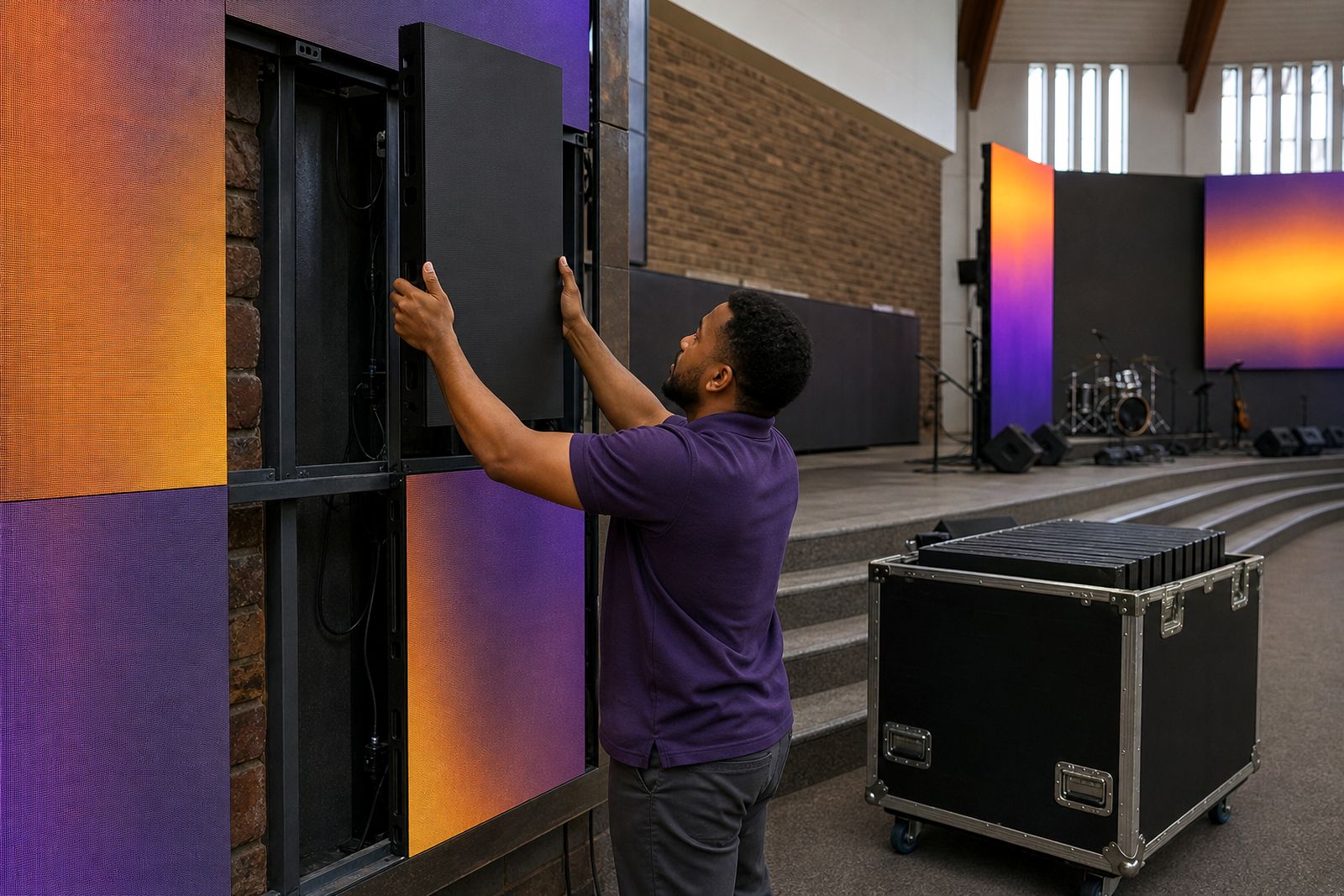
Rental and event LED panels are indoor video wall cabinets made for repeated assembly and strip-down. The cabinet frame uses quick-lock joining points so rows line up cleanly, and service access is arranged for venue work where time on site is often tight. These panels suit conference stages, product launches, gala sets, expo booths, fashion runways, church events, club interiors and studio backdrops.
Unlike a fixed boardroom wall, an event screen may need to travel, stack in flight cases and go up on a truss or floor support. That changes the cabinet construction, the corner protection and the way power and data loom runs are planned. The result is a panel range that handles frequent handling better, while still giving a proper LED wall finish on camera and in person.
- Quick-lock cabinet alignment for faster build sequences
- Indoor brightness levels suited to halls, ballrooms and expo floors
- Options for flown walls, ground stacks and stage surrounds
- Front or rear service access depending on the frame layout
Cabinet sizes, pitch options and working limits
Most rental-ready indoor cabinets follow practical module sizes that scale well on stage, such as 500 x 500 mm and 500 x 1 000 mm. Those formats make it easier to build wide presentation walls, side screens and tall portrait features without awkward leftover sections. For close audience positions, finer pixel pitch matters more than headline wall size. For deeper rooms and general event graphics, a slightly wider pitch can be the better value.
Typical indoor event pitches start around P1.9 and move through P2.6, P2.9 and P3.9, with finer options used where viewers stand very near the screen. Very fine pitch on a touring schedule needs careful handling and a flatter budget, so it is usually reserved for premium conference and studio work. Coarser indoor pitch works well for stage branding, lyric support and exhibition loops where people view from a few metres back.
- 500 x 500 mm cabinets for flexible layouts and curves where supported
- 500 x 1 000 mm cabinets for faster coverage on wider walls
- Fine pitch choices for close viewing in conference rooms and launch sets
- Standard event pitch choices for halls, churches and mall activations
- Indoor use only, not for rain, direct weather exposure or roadside billboard work
These systems are not the right fit for outdoor forecourts, sun-exposed sports fields or permanent roadside advertising. They also do not replace a domestic television wall where audio furniture and casual viewing matter more than scalable stage presentation.
Where these panels fit best
Event panels earn their keep where the wall must go in cleanly, look even across joins and break down without damage at the end of the booking. In Gauteng that often means hotel ballrooms, conference centres, exhibition halls, retail atriums and studio spaces around Randburg, Sandton, Midrand and Pretoria. Across other provinces, the same panel type is common in convention venues, churches, clubs and travelling brand activations.
They are especially useful when the screen shape is part of the set rather than an afterthought. A wide main wall with a lectern cut-out, a narrow portrait totem on a stand, or a low-height wall under a lighting truss all need cabinet sizes and controller mapping planned together. We can supply rental-ready panel systems for repeated venue use or install them as part of a semi-permanent indoor event setup.
Where they do not suit is just as important. If the room is small and viewers sit very close all day, a fine pitch permanent wall may be the better route. If the requirement is daytime shop window exposure facing direct sun, this indoor range is not the right product.
Site and installation requirements
A good event wall starts with the venue drawings and a realistic loading plan. We need to know whether the screen will be flown from approved roof points, built on a ground stack frame, fixed to a temporary scenic structure or placed on a stage platform. Floor level matters more than many teams expect. A slight dip across a ballroom floor can telegraph through the wall if the base frame is not shimmed correctly.
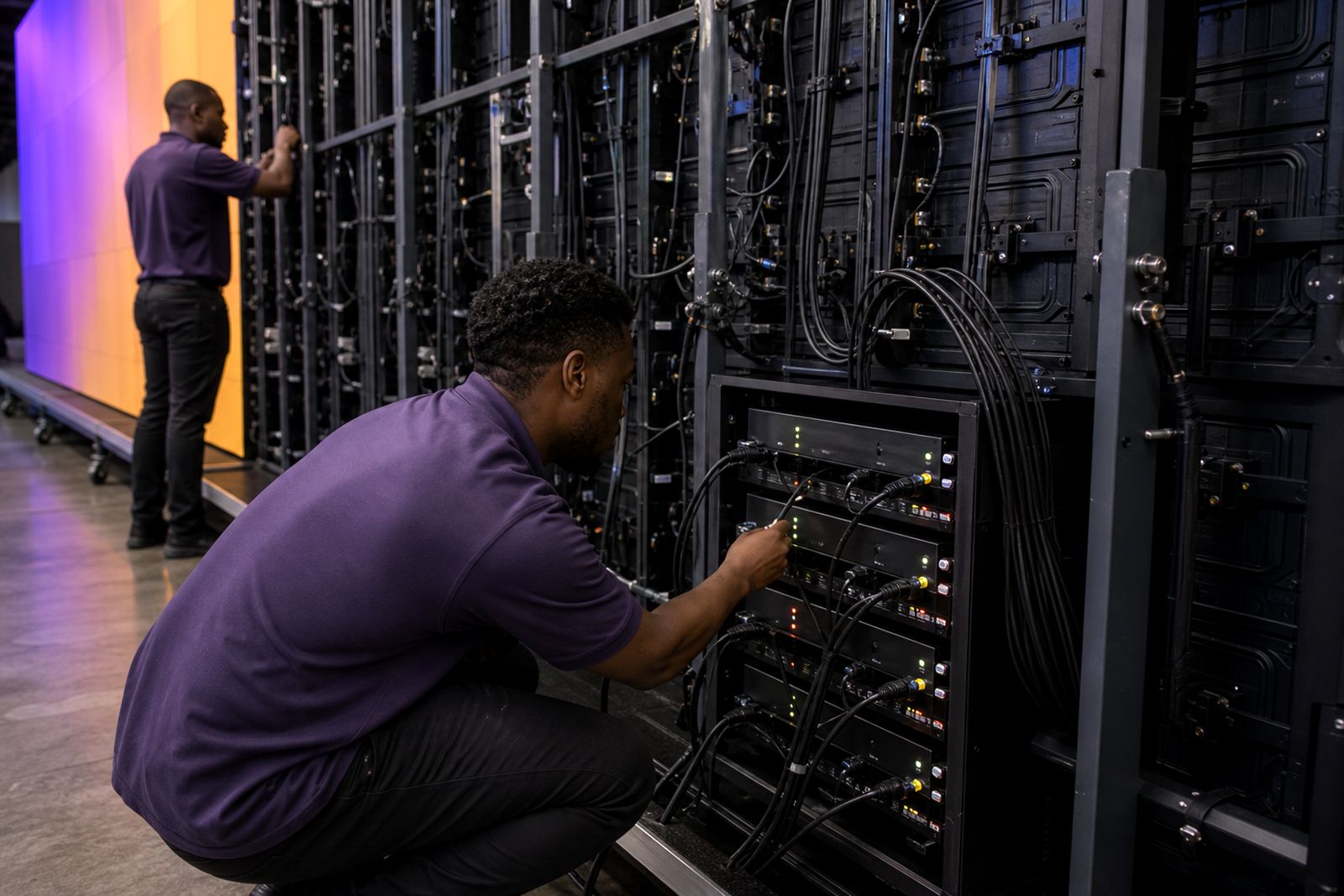
Power location and cable routing must also be set early. LED walls run from mains power through dedicated distribution and control equipment, so the feed position, backup power arrangements and front-of-house control point should be known before build day. In venues with strict house rules, rigging sign-off, access hours and loading-bay restrictions need to be cleared first or the whole install window gets squeezed.
- Confirm wall width, height and whether the layout is landscape or portrait
- State flown, ground-stacked or frame-mounted installation
- Share venue access limits, lift sizes and loading-bay rules
- Note mains power position and control position distance
- Advise whether live camera, presentation laptops or media playback will feed the wall
Handling, transport and day-to-day care
Indoor rental panels are tough enough for regular event use, but the LED face remains a precision surface. Cabinets should travel in proper cases, stay dry in transit and be unpacked on a clean floor area. Pressure on the diode face, careless stacking and loose hardware in the case are the usual causes of avoidable damage. On build days the crew should use gloves where needed and never drag a panel edge along concrete.
After use, the wall needs an orderly strip-down with power isolated and cable looms removed without yanking connectors. Dust from carpeted venues and haze residue from entertainment spaces can build up over time, so routine inspection and careful cleaning are part of keeping colour and panel alignment consistent. If a venue sits near the coast, salt-laden humidity makes storage conditions more important, and equipment left in damp loading areas can age badly.
Details to send with your enquiry
To size the right panel system, tell us what the wall must do in the room, not only the diagonal measurement. The useful starting points are venue type, audience distance, wall dimensions and whether the wall will be used once, seasonally or as part of an in-house event stockholding. If there is a stage drawing or stand render, send that through our contact form with the screen position marked.
It also helps to know what content source will be used. Slides, camera feed, motion graphics and mixed-format playback place different demands on processing, scaling and confidence monitoring. If the wall must fit around scenic elements or a low ceiling, say so early, it saves time on layout changes later.
- Venue town and province
- Required screen width and height in metres
- Nearest audience viewing distance
- Ground stack, flown or framed installation method
- Dates of use and whether the system will tour between venues
- Input sources such as laptop presentation, switcher feed or media player
What our LED Video Walls customers say
Verified Google reviews
Questions we get asked
Can these panels be used as a permanent wall?
Yes, in some indoor venues a rental-style cabinet works well for a semi-permanent screen, especially where access is awkward or the wall may be reconfigured later. For everyday boardroom or retail use, a fixed installation panel can be the neater choice.
Are rental and event LED panels suitable for churches and conference centres?
They are a strong fit for churches, conference halls and multipurpose venues that host changing programmes. The cabinet format makes stage changes and future expansion easier than a single-purpose built wall.
Do you supply the control equipment as well as the panels?
Yes. We supply the screen with the required processing, control and mounting hardware, and we can integrate playback sources used for presentations, live events and in-venue messaging.
Also worth a look
Tell us about the job
Send sizes, materials and where you are through our contact form, and we will come back with the practical options.
Open the contact form