

LED wall vs projector or TV grid
Choosing a display for an indoor venue is not only about screen size. Brightness in daytime rooms, visible joins, wall depth, service access and long term running costs all affect whether an LED wall, projector or TV grid makes sense.
Start with the room, not the screen
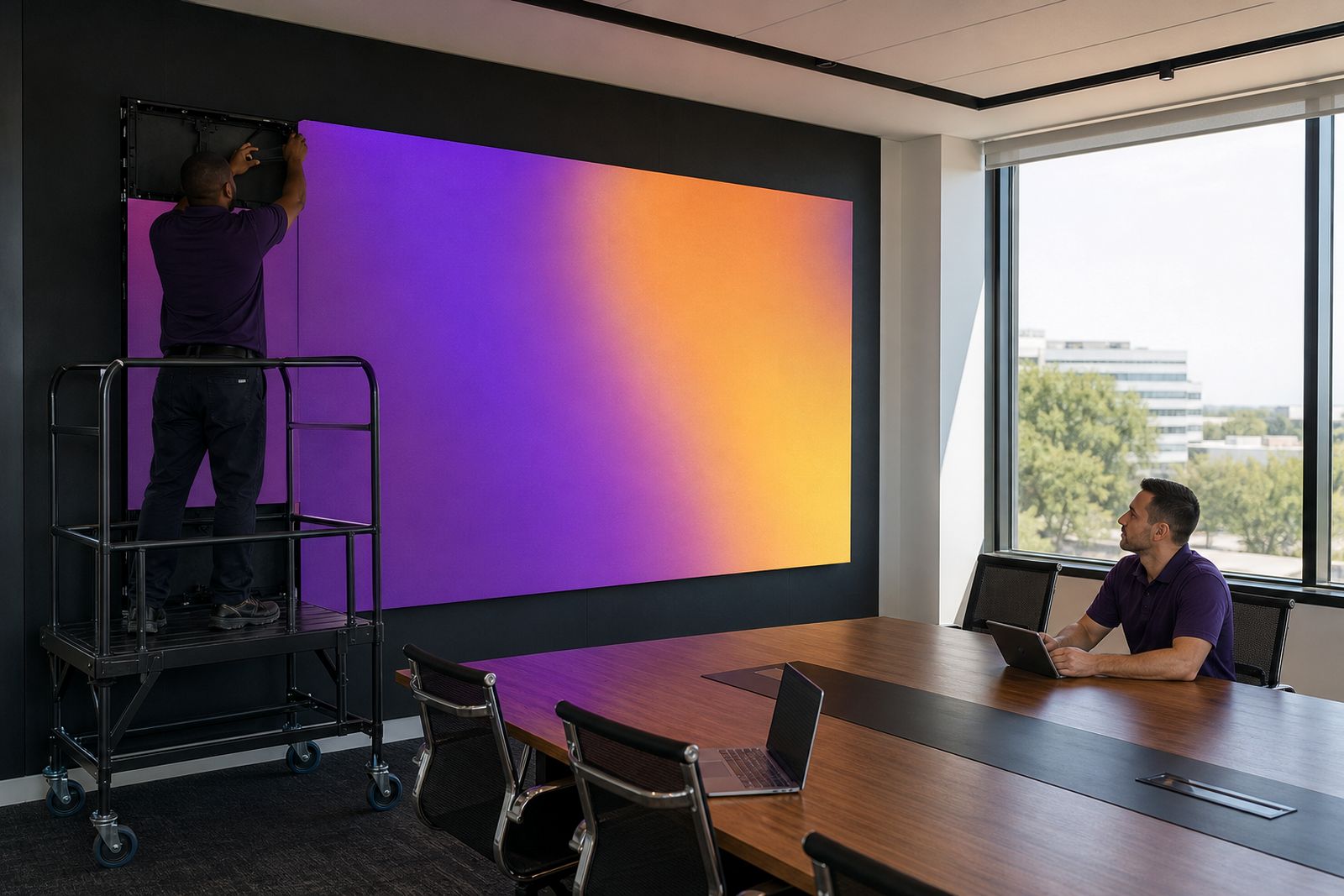
The right display usually comes from the room conditions first. In a boardroom with glass on two sides, a projector can wash out by mid-morning, while a TV grid may look bright enough but leaves bezels across charts, branding and speaker video. An indoor LED wall is normally chosen when the room needs higher brightness, a cleaner single-image look and a size that moves beyond what one flat panel can do neatly.
Distance matters as much as light levels. If viewers sit close to the screen, pixel pitch and image smoothness become critical. If the room is deep and viewers are further back, the priority often shifts to screen size and readable text from the last row. Ceiling height, wall strength and cable routes should be checked early, because these points can limit what is practical long before image quality becomes the main issue.
- Measure viewing distance from the front row and the back row.
- Note windows, skylights and downlights that hit the screen face.
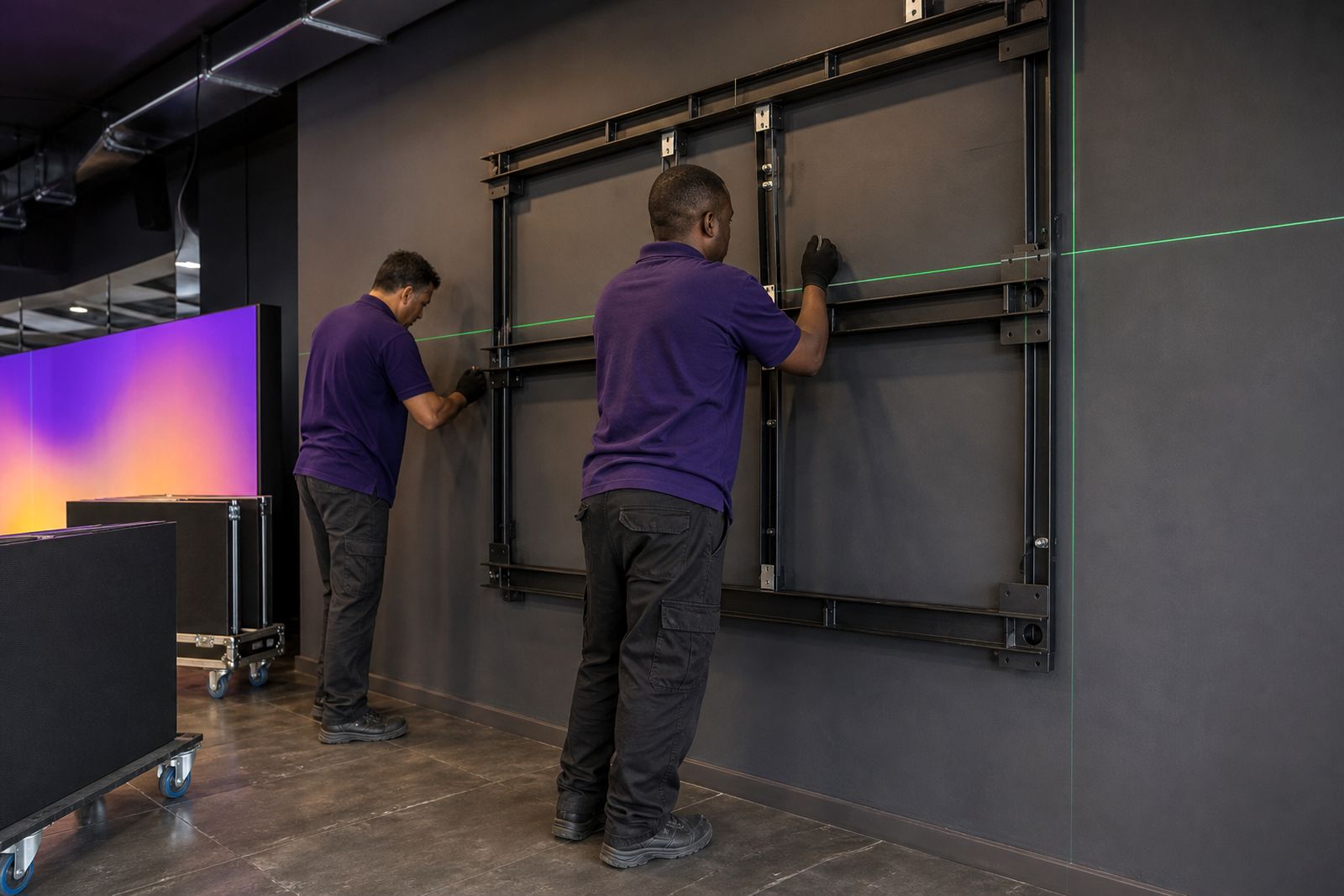
- Check wall type, mounting points and service access behind or beside the display.
- List the main content: slides, spreadsheets, live camera, retail promos or worship lyrics.
Brightness and contrast under real indoor lighting
Brightness is one of the biggest differences between these options. Projectors rely on reflected light, so the image depends heavily on room control. In a darkened training room they can still work well, but in a bright retail store, church foyer or conference room with open blinds, contrast drops fast. Blacks lift, colours flatten and small text loses edge definition.
TV grids produce a direct-lit image and handle ambient light better than projection, but once you tile multiple screens together the bezels remain visible. LED walls are also direct view displays, and they are commonly selected where the venue cannot stay dim all day. This is especially relevant in Johannesburg office parks, malls and studio spaces where daytime use is normal and room lighting cant always be cut back enough for projection.
- Projector: best where light can be managed carefully.
- TV grid: good brightness, but joins cut through the picture.
- LED wall: strong daytime performance with no projector beam path.
Seams, scale and how the image feels to the audience
If the picture must read as one uninterrupted canvas, LED walls have a clear advantage over a TV grid. Retail campaigns, stage backdrops, speaker support graphics and corporate branding often look far more polished without bezels crossing logos or text. For conference rooms, that single-image effect also helps when sharing spreadsheets, dashboards and video calls on a larger format wall.
Projectors avoid bezel lines too, but once screen sizes increase there are trade-offs in brightness and room layout. The throw distance, projector position and shadow risk all need attention. TV grids can be a sensible choice in some control or monitoring spaces where dividing the image is acceptable, yet they are often less convincing when the display is meant to feel immersive.
Scale should also be judged in relation to the room. Bigger is not automatically better. A wall that overwhelms the viewing distance can make text tiring to read, while a display that is too small leaves a premium room looking underdone. This part needs proper planning, not guesswork.
Running costs, servicing and room impact
Running cost is not just the purchase line. Power draw, lamp or light source replacement in projectors, cleaning, access equipment and downtime all count. A projector may look attractive at first, but if the room needs blinds closed during every daytime meeting, the operational cost includes the compromise to how the room gets used. A TV grid may be straightforward to run, though servicing one screen in a tiled array can still leave a visible mismatch while the wall is incomplete.
Indoor LED walls need mains power, signal management and proper processing, but they also remove the need for a projection path and can make better use of shallow conference rooms. Front-service panel options can help where rear access is impossible, which matters in fitted offices and retail storefronts. In coastal humidity or dusty urban sites, maintenance planning matters more than brochure claims, and the mounting system must allow safe access for service work.
- Consider electricity use during actual daily operating hours.
- Allow for processors, control gear and protected cable routes.
- Check how a technician will reach the display for module or power service.
- Think about whether the room can function with dimmed lights every day.
A step-by-step shortlist for common venues
For boardrooms and conference rooms, start with daylight exposure and the smallest text that must be read clearly. If executives need a large single image for presentations and hybrid meetings, fine pitch LED often becomes the better fit than a projector or a matrix of flat panels. In churches and auditoriums, the decision usually leans on room depth, stage lighting and whether side screens or a main backdrop are being planned.
Retail stores, malls and clubs bring different priorities. Here, brightness, motion, branding impact and operating hours tend to carry more weight. A projector in a shopfront rarely holds up against ambient light, while a TV grid can break the visual effect of promotional content. Rental-ready indoor LED panels also make sense for venues that reconfigure layouts for launches, fashion events or temporary stages.
- Boardroom: prioritise text clarity, glare control and neat wall integration.
- Church or auditorium: balance stage sightlines, depth and lyric readability.
- Retail store or mall: favour brightness, colour punch and a bezel-free image.
- Event venue or club: check rigging, fast assembly needs and processor flexibility.
When each option makes sense
A projector still suits rooms where budgets are tight, lighting can be controlled and the display is used mainly for occasional presentations. A TV grid can suit monitoring walls or spaces where separate windows on screen are more useful than one smooth image. An indoor LED wall is usually the stronger option when the venue needs brightness in normal room light, a custom size, a clean uninterrupted picture and reliable day-to-day use.
If the choice is still unclear, the sensible route is to compare the room against three questions: can the space stay dark enough for projection, will bezel lines be acceptable, and does the display need to feel like part of the room rather than equipment added as an afterthought? Those answers narrow the field quickly. For venues across Gauteng and other provinces, a proper site survey helps settle size, pitch, mounting method and processor layout before the wall is specified, which saves rework later on.
What our LED Video Walls customers say
Verified Google reviews
Questions we get asked
Is an LED wall better than a projector for a bright conference room?
In most bright conference rooms, yes. A projector loses contrast when daylight or strong ceiling lights hit the screen, while an indoor LED wall stays clearer and easier to read during normal daytime use.
When does a TV grid still make sense?
A TV grid can work where the image is naturally split into separate sources, such as monitoring or information screens. If the goal is one large polished canvas for branding, presentations or promos, bezel lines usually become the drawback.
Do you handle projectors or flat panel TV installations?
No. We focus on indoor LED video wall panels, with processors, mounting frames, design, installation and support for permanent and rental-ready setups.
Also worth a look
Tell us about the job
Send sizes, materials and where you are through our contact form, and we will come back with the practical options.
Open the contact form